
Product
Product
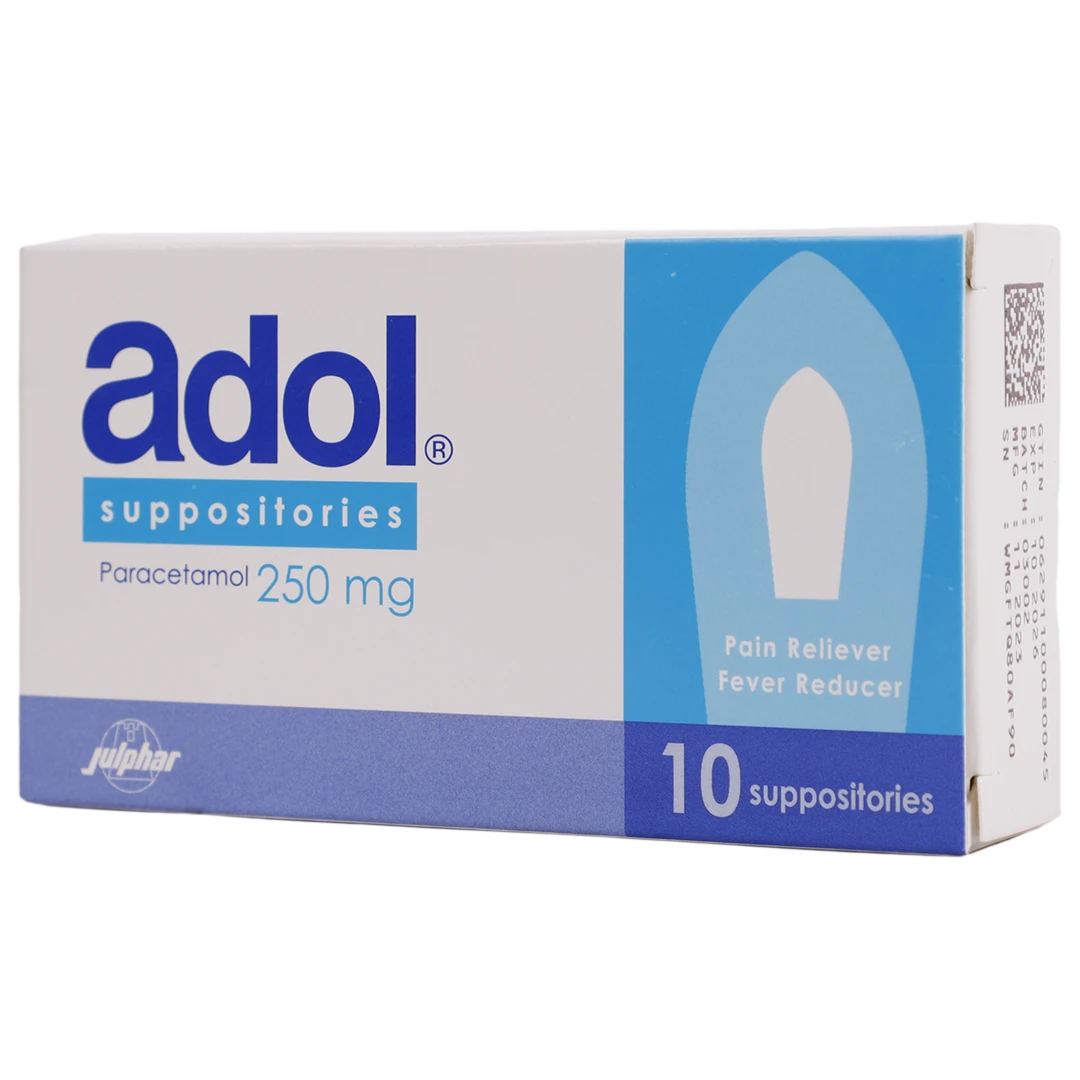
adol suppositories contain a medicine called paracetamol. This belongs to a group of medicines called pain-killers (analgesics). A suppository is a small, torpedo-shaped, medicine which is inserted into the back passage (rectum). adol suppositories are used to treat pain and high temperature (fever), they are used when it is difficult to take paracetamol as tablets, suspension or syrup. adol 250mg suppositories are for children aged from 6 to 12 years. You must talk to a doctor if you do not feel better or if you feel worse after 3 days. How to use adol 250mg suppositories 6 years to 9 years (body weight 20-30kg) Number of Suppositories: 1 Minimum Length of time between doses: 4 - 6 hours Maximum number of suppositories in 24 hours: 4 10 years to 12 years (body weight 30-40kg) Number of Suppositories: 1 or 2 Minimum Length of time between doses: 4 - 6 hours Maximum number of suppositories in 24 hours: 8 How to use the suppositories: The bowels need to be empty when you use this medicine. If you need to go to the toilet, make sure that you do it before you use the suppository. It may be easier to use the suppository if you are lying on your front or side on a bed. Wash your hands. Then peel the wrapping apart to take out the suppository. Do not break the suppository before use. Gently push the suppository into your back passage with the pointed end first. To make it easier to use the suppository you may warm it slightly between your hands beforehand. Try to keep still for a minute or two and then wash your hands. If you need to use another suppository, then follow the above procedure again. Warnings and precautions Do not use adol Suppositories: If you are allergic to paracetamol or any of the other ingredients of this medicine. Warnings and precautions Talk to your doctor or pharmacist before using adol suppositories. Take special care with the use of adol suppositories and talk to your pharmacist or doctor if: You have problems with your liver or kidneys. Side Effects Like all medicines, this medicine can cause side effects, although not everybody gets them. Stop using adol suppositories immediately and call your doctor if you notice you have any signs of allergic reaction. Signs of an allergic reaction include a rash, swallowing or breathing problems, swelling of your lips, face, throat or tongue. The following side effects can happen with this medicine. Common side effects (affects more than 1 in 100 people taking this medicine): Redness or soreness in and around the back passage. Rare side effects (affects less than 1 in 1000 people taking this medicine): Blood problems. If these happen, you may bruise or bleed more easily than usual, be more susceptible to infections, or get a high temperature (fever) and ulcers in the mouth and throat Liver problems. Symptoms may include jaundice (yellowing of the skin or whites of the eyes). Storage Information Store below 30ºC, in the original container, protected from heat. Drug Interactions Tell your doctor or pharmacist if you are taking, have recently taken or might take any other medicines. This is because adol suppositories can have an effect on the way some medicines work and some medicines can have an effect on how adol suppositories work. In particular tell your doctor or pharmacist if you are taking any of the following: Other medicines containing paracetamol – do not use adol suppositories at the same time Medicines to treat nausea (feeling sick) and vomiting (being sick), such as metoclopramide and domperidone Colestyramine, used to reduce the level of cholesterol (fat) in the blood Medicines called anticoagulants, such as warfarin, used for treating blood clots or “thinning the blood” Medicines called anticonvulsants used for treating epilepsy or fits (e.g. phenytoin, carbamazepine) Phenytoin may reduce the effect of paracetamol on relieving pain and fever and may increase the formation of the toxic N-acetyl-p-benzoquinone imine (NAPQI) metabolite of paracetamol which may lead to increased risk of liver toxicity. The antibiotic rifampicin. Flucloxacillin (antibiotic), due to a serious risk of blood and fluid abnormality (high anion gap metabolic acidosis) that must have urgent treatment and which may occur particularly in case of severe renal impairment, sepsis (when bacteria and their toxins circulate in the blood leading to organ damage), malnutrition, chronic alcoholism, and if the maximum daily doses of paracetamol are used. Ingredients The active substance is paracetamol. Other ingredient: Semi-synthetic glycerides of saturated fatty acids from C8 and C18 [Suppocire AM].
We are Sorry, this product is unavailable now, explore other products.