
Product
Product
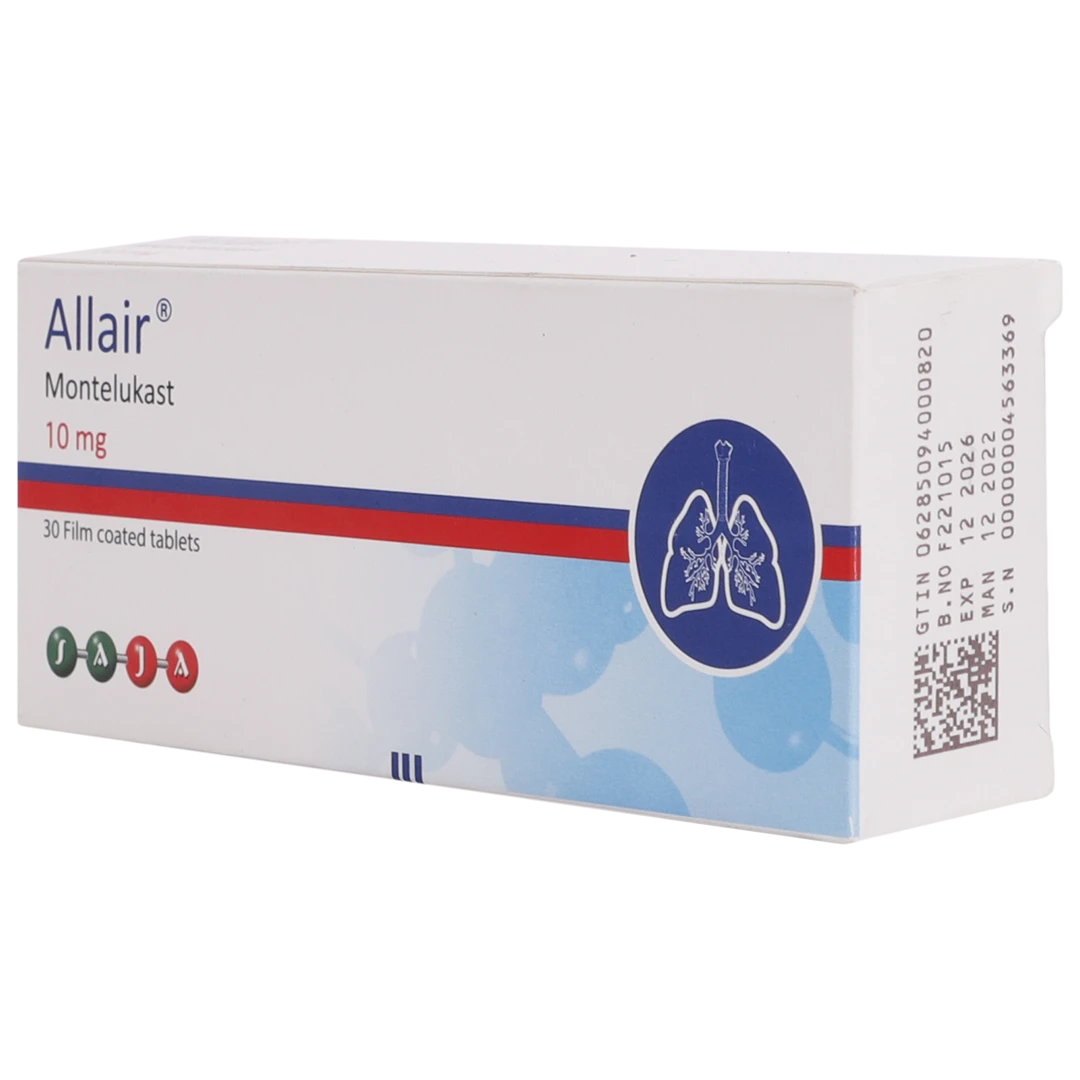
What Allair is Allair is a leukotriene receptor antagonist that blocks substances called leukotrienes. How Allair works Leukotrienes cause narrowing and swelling of airways in the lungs and also cause allergy symptoms. By blocking leukotrienes, Allair improves asthma symptoms, helps control asthma and improves seasonal allergy symptoms (also known as hay fever or seasonal allergic rhinitis). When Allair should be used Your doctor has prescribed Allair to treat asthma, preventing your asthma symptoms during the day and night. Allair is used for the treatment of adults and adolescents 15 years of age and older who are not adequately controlled on their medication and need additional therapy. Allair also helps prevent the narrowing of airways triggered by exercise. In those asthmatic patients in whom Allair is indicated in asthma, Allair can also provide symptomatic relief of seasonal allergic rhinitis. Your doctor will determine how Allair should be used depending on the symptoms and severity of your asthma. How to use Always take this medicine exactly as your doctor or pharmacist has told you. Check with your doctor or pharmacist if you are not sure. You should take only one tablet of Allair once a day as prescribed by your doctor. It should be taken even when you have no symptoms or have an acute asthma attack. For adults and adolescents 15 years of age and older: The recommended dose is one 10 mg tablet to be taken daily in the evening. If you are taking Allair, be sure that you do not take any other products that contain the same active ingredient, montelukast. This medicine is for oral use. You can take ALLAIR 10 mg with or without food. Warnings and precautions Do not take Allair If you are allergic to montelukast or any of the other ingredients of this medicine. Warnings and precautions Talk to your doctor or pharmacist before taking Allair. If your asthma or breathing gets worse, tell your doctor immediately. Oral Allair is not meant to treat acute asthma attacks. If an attack occurs, follow the instructions your doctor has given you. Always have your inhaled rescue medicine for asthma attacks with you. It is important that you or your child take all asthma medications prescribed by your doctor. Allair should not be substituted for other asthma medications your doctor has prescribed for you. Any patient on anti-asthma medicines should be aware that if you develop a combination of symptoms such as a flu-like illness, pins and needles or numbness of arms or legs, worsening of pulmonary symptoms, and/or rash, you should consult your doctor. You should not take acetyl-salicylic acid (aspirin) or anti-inflammatory medicines (also known as non-steroidal anti-inflammatory drugs or NSAIDs) if they make your asthma worse. Side Effects In clinical studies with Allair 10 mg film-coated tablets, the most commonly reported side effects (occurring in at least 1 of 100 patients and less than 1 of 10 patients treated) thought to be related to Allair were: Abdominal pain Headache These were usually mild and occurred at a greater frequency in patients treated with Allair than placebo (a pill containing no medication). Additionally, while the medicine has been on the market, the following have been reported: Upper respiratory infection (Very common) Increased bleeding tendency (Rare) Allergic reactions including swelling of the face, lips, tongue, and/or throat which may cause difficulty in breathing or swallowing (Uncommon) Behavior and mood related changes [dream abnormalities, including nightmares, trouble sleeping, sleep walking, irritability, feeling anxious, restlessness, agitation including aggressive behavior or hostility, depression (Uncommon); tremor, disturbance in attention, memory impairment (Rare); hallucinations, disorientation, suicidal thoughts and actions (Very rare)] Dizziness, drowsiness, pins and needles/numbness, seizure (Uncommon) Palpitations (Rare) Nosebleed (Uncommon), swelling (inflammation) of the lungs (Very rare) Diarrhoea, nausea, vomiting (Common); dry mouth, indigestion (Uncommon) Hepatitis (inflammation of the liver) (Very rare) Rash (Common); bruising, itching, hives (Uncommon); tender red lumps under the skin most commonly on your shins (erythema nodosum), severe skin reactions (erythema multiforme) that may occur without warning (Very rare) Joint or muscle pain, muscle cramps (Uncommon) Fever (Common); weakness/tiredness, feeling unwell, swelling (Uncommon) Storage Information Store below 30 °C. Drug Interactions Tell your doctor or pharmacist if you are taking or have recently taken or might take any other medicines including those obtained without a prescription. Some medicines may affect how Allair works, or Allair may affect how other medicines work. Tell your doctor if you are taking the following medicines before starting Allair: Phenobarbital (used for treatment of epilepsy) Phenytoin (used for treatment of epilepsy) Rifampicin (used to treat tuberculosis and some other infections) Gemfibrozil (used for treatment of high lipid levels in plasma) Ingredients The active substance is Montelukast. List of excipients: Lactose monohydrate Microcrystalline Cellulose PH 101 Microcrystalline Cellulose PH 102 Hydroxypropyl Cellulose -L Croscarmellose Sodium Magnesium Stearate Opadry Yellow 02A22352 Specifications Allair 10 mg is buff round shaped biconvex film coated tablet with code SJ532 in one side.
We are Sorry, this product is unavailable now, explore other products.