
Product
Product
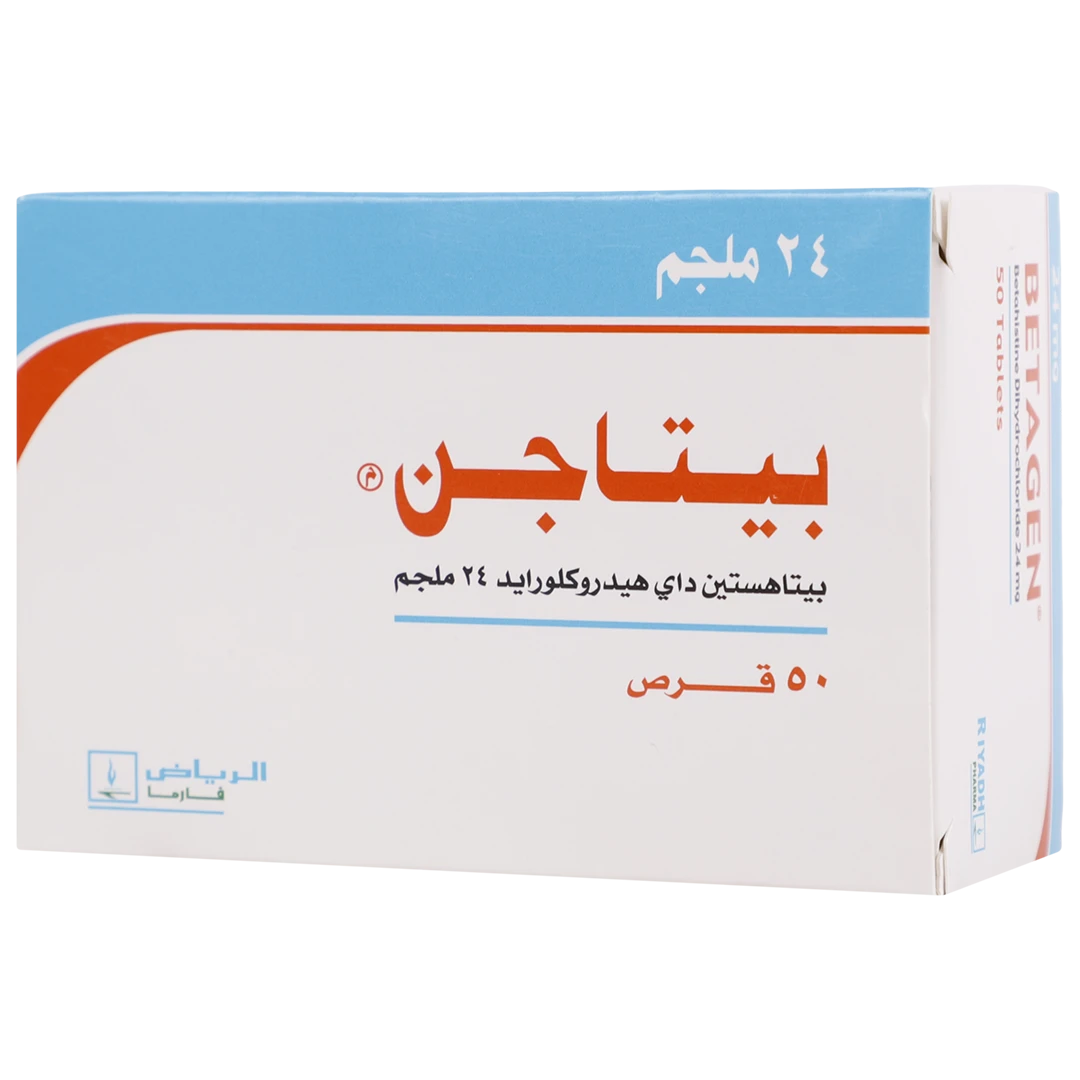
The full name of Betagen is Betahistine Dihydrochloride 24 mg Tablets. Betahistine Dihydrochloride is a type of medicine called a histamine analogue. It is used as a treatment for Ménière’s syndrome, a condition caused by the pressure of excess fluid in the inner ear. Betahistine dihydrochloride is thought to work by improving blood flow in the inner ear, which reduces the build up of pressure. It is this pressure in the ear which is thought to cause the vertigo (dizziness), tinnitus (ringing in the ears) and hearing loss suffered by people with Ménière’s disease How to use How to take Betagen Swallow the tablets with water. Take the tablet with or after a meal. However, Betagen can cause mild stomach problems. Taking Betagen with food can help reduce stomach problems. How much Betagen to take Always follow your doctor's instructions because your doctor might adjust your dose. The usual dose is: Adults The usual dose is 24 mg to 48 mg per day. If you take more than one tablet each day, spread your tablets evenly over the day. For example, take one tablet in the morning, one at midday and one in the evening. Try to take your tablet at the same time each day. This will make sure that there is a steady amount of the medicine in your body. Taking at the same time will also help you remember to take your tablets. Betagen is not recommended for use in children. Warnings and precautions Do not take betagen without talking to your doctor if you: Have ever had an allergic reaction to betahistine dihydrochloride or any of the other ingredients. Have phaeochromocytoma (a tumour associated with the adrenal gland which causes high blood pressure) Have or have ever had a stomach or intestinal ulcer Have asthma Have a condition called porphyria If you have nettle rash, skin rash or a cold in the nose caused by an allergy, since these complaints may be exacerbated. If you have low blood pressure Children Betagen is not recommended for those under 18 years old. Side Effects Like all medicines, Betahistine Dihydrochloride Tablets can have side effects although not everybody gets them. STOP taking Betahistine Dihydrochloride Tablets and see your doctor or nearest hospital casualty department IMMEDIATELY if you experience: An allergic reaction. Symptoms of an allergic reaction include; skin rashes, swelling of the lips, face, throat or tongue, difficulty breathing or swallowing. Other common side effects are: Feeling sick (nausea) Being sick (vomiting) Indigestion (dyspepsia) Abdominal pain and bloating Stomach upsets Headaches Itching and skin rashes Storage Information Store below 30ºC. Store in the original package in order to protect from light and moisture. Drug Interactions Please inform your doctor or pharmacist if you are taking, or have recently taken any other medicine, even those not prescribed by a doctor. In particular, tell your doctor or pharmacist if you are taking any of the following medicines: Antihistamines, which are used to relieve allergic conditions (e.g. terfenadine, diphenhydramine and chlorpheniramine). Monoamine-oxidase inhibitors (MAOIs) - used to treat depression or Parkinson’s disease. These may inhibit metabolism of Betahistine Dihydrochloride. Ingredients Each tablet contais Betahistine Dihydrochloride (Ph. Eur) 24 mg. Other ingredients: microcrystalline cellulose (PH 101), mannitol, citric acid monohydrate, colloidal anhydrous silica, talc & purified water. Specifications Betagen Tablets looks white to off white, biconvex, circular tablets debossed “RC 60” on one side and break line on the other side.
We are Sorry, this product is unavailable now, explore other products.