
Product
Product
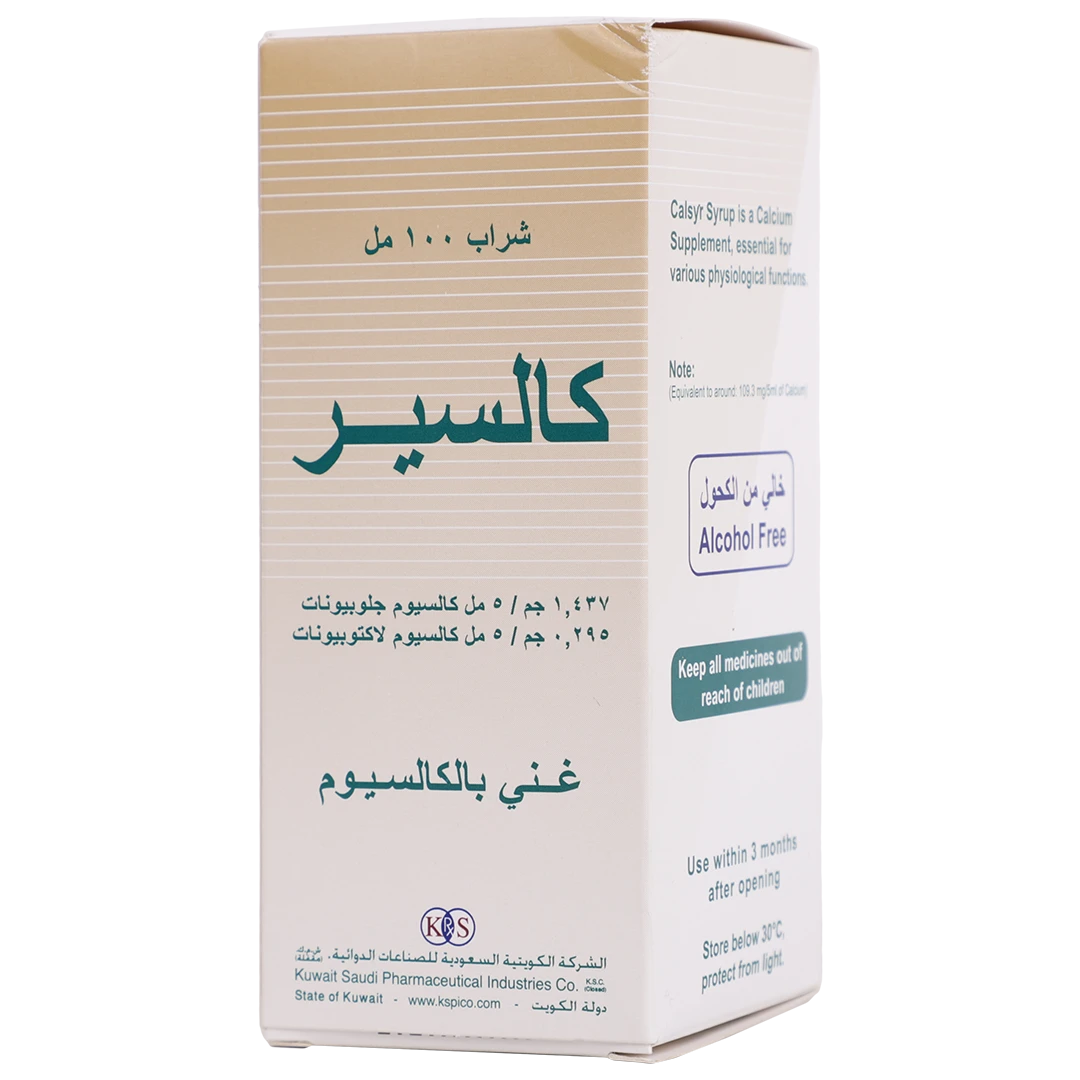
Calsyr Syrup belongs to a group of medicines called calcium supplements. It is used to: Treat low levels of calcium in your body Help to slow down or stop loss of calcium from bones in osteoporosis (thinning of the bone) Treat people who do not get enough calcium in their diet Treat babies with low levels of calcium. How to use Adults The usual dose for each condition is given below. Osteoporosis: The usual dose is eleven to fifteen, 5 ml spoonful of Calsyr Syrup per day. Low calcium levels: The usual dose is three to fifteen, 5 ml spoonful of Calsyr Syrup per day. Elderly Your doctor may give you a lower dose. Make sure that you follow the instructions given to you by your doctor. Children The usual dose for each condition is given below. Low calcium levels: The usual dose is six to nine 5 ml spoonful of Calsyr Syrup per day. Low calcium diet: The usual dose is two to six 5 ml spoonful of Calsyr Syrup per day. Newborn For newborn infants, the syrup may be mixed with the first (small) part of the milk feed. Low calcium levels: 1.85 ml of syrup per kg of body weight a day. Warnings and precautions Do not take Calsyr Syrup if: You are allergic (hypersensitive) to calcium glubionate or calcium lactobionate or any of the ingredients of Calsyr Syrup. You have high levels of calcium in your blood You have very high levels of calcium in your urine You have ever suffered from kidney stones, or have severe kidney problems You have galactosaemia (a rare genetic disorder which means you cannot metabolise the sugar galactose). If any of the above applies to you, or you are not sure, speak to your doctor or pharmacist before you take Calsyr Syrup. Take special care with Calsyr Syrup Before you take Calsyr Syrup tell your doctor if: You are diabetic because Calsyr Syrup contains sugar You have high levels of calcium in your urine. Side Effects Like all medicines, Calsyr Syrup can sometimes cause side effects, although not everyone gets them. The following side effects have been reported: Rare side effects (that affect less than 1 person in 1000): Constipation Diarrhea Other side effects: Increased calcium levels in your blood, symptoms of which include: Feeling or being sick Feeling thirsty Passing water more frequently Loss of appetite Stomach pain Bone pain Muscle weakness Drowsiness Confusion Storage Information Store below 30° C. Protect from light. Use within 3 months after opening. Drug Interactions Tell your doctor or pharmacist if you are taking or have recently taken any of the following medicines as they may interfere with Calsyr Syrup: Vitamin D (used for replacement therapy) Cardiac glycosides for example digoxin (to treat an irregular heartbeat) Tetracyclines (a type of antibiotic) for example, doxycycline, oxytetracycline (used to treat bacterial infections) Fluoride preparations (used to prevent tooth decay) Thiazide diuretics (water tablets) for example bendroflumethiazide, chlortalidone (used to treat water retention or high blood pressure) If you are taking tetracycline antibiotics or fluoride preparations you should leave a gap of at least three hours between taking these medicines and taking Calsyr Syrup. Ingredients The active substances in Calsyr Syrup are calcium glubionate and calcium lactobionate. The excipients are: Sucrose, Glycerol, Citric acid monohydrate, Sodium benzoate, Disodium edetate, Orange flavour and purified water. Specifications Calsyr Syrup is clear pale to yellow coloured solution with an orange flavour.
We are Sorry, this product is unavailable now, explore other products.