
Product
Product
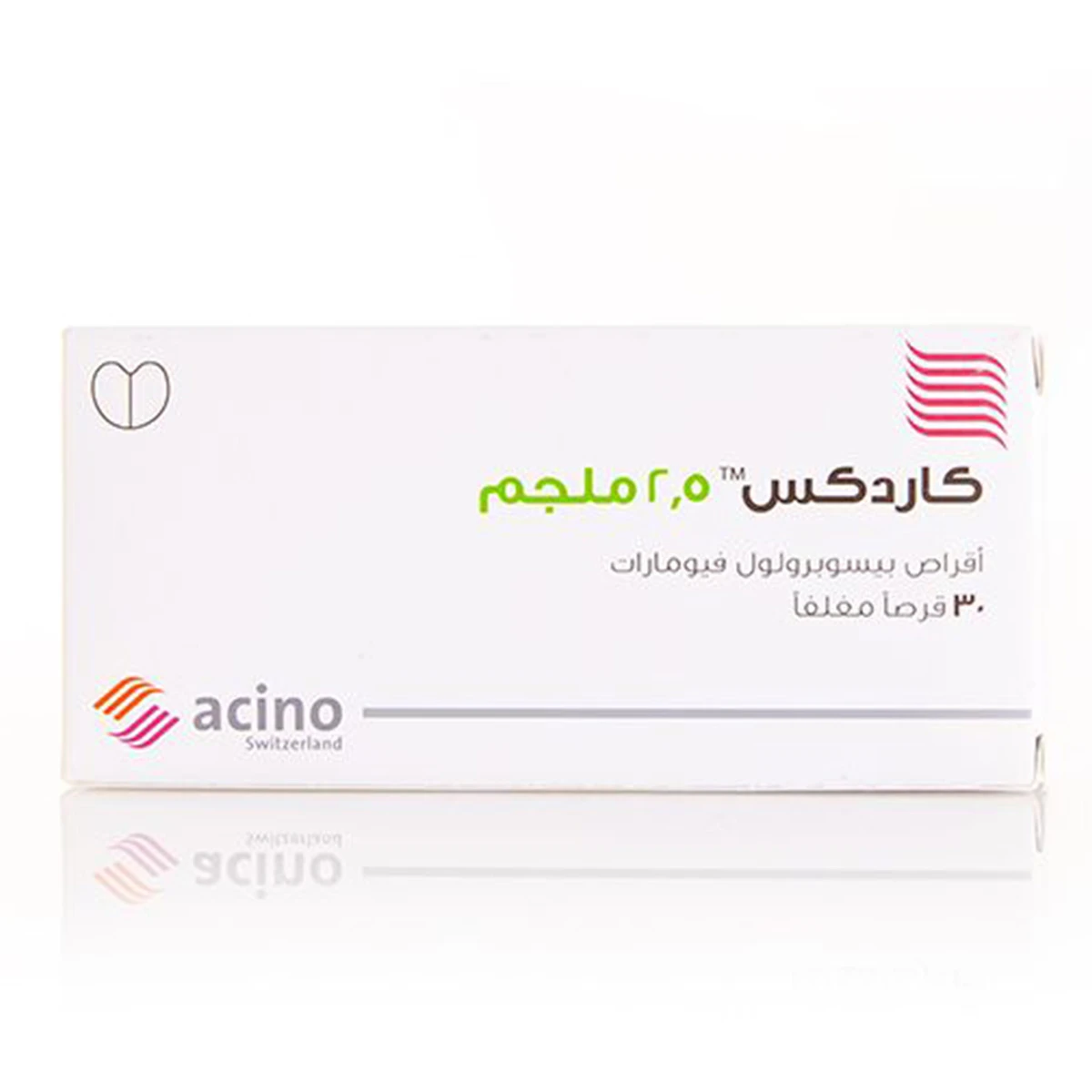
The active ingredient in this medicine is Bisoprolol fumarate. Cardex belongs to group of medicines called beta-blockers. Beta-blockers protect the heart against too much activity. Cardex 2.5 mg, 5 mg and 10 mg tablets are used in combination with other medicines to treat stable heart failure. Heart failure occurs when the heart muscle is too weak to pump blood around the circulation adequately. This results in breathlessness and swelling. Cardex slows down the heart rate and makes the heart more efficient at pumping blood around the body. Cardex 5 mg and 10 mg tablets are also used to treat high blood pressure (Hypertension) and angina pectoris (Chest pain caused by blockages in the arteries that supply the heart muscle). How to use Cardex should be taken in the morning, with or without food. Swallow the tablet/s whole with some water and do not chew or crush them. Treatment with Cardex is usually prolonged. Adults: Chest pain and high blood pressure: Your doctor will start the treatment with lowest possible dose (5 mg). Your doctor will monitor you closely at the start of treatment. Your doctor will increase your dose to obtain the best possible dosage for you. The maximum recommended dose is 20 mg once per day. Patient with kidney disease: Patient with severe kidney disease should not exceed 10 mg of bisoprolol once daily. Please consult your doctor before starting to use this medicine. Patient with liver disease: Patient with severe liver disease should not exceed 10 mg of bisoprolol once daily. Please consult your doctor before starting to use this medicine. Heart failure: Before you start using Cardex, you should already be taking other medicines for heart failure including any ACE inhibitor, a diuretic and (as an added option) a cardiac glycoside. Warnings and precautions Do not take Cardex If you are allergic (Hypersensitive) to Bisoprolol fumarate or any of the other ingredients of Cardex tablets. If you have severe asthma or sever chronic lung disease. If you have severe blood circulation problem in your limbs (such as Raynaud’s syndrome), which may cause your fingers and toes to tingle or turn pale or blue. If you have untreated phaeochromocytoma, a rare tumour of the adrenal gland (medulla). If you have metabolic acidosis, a condition when there is too much acid in the blood. If you have heart failure that suddenly becomes worse and/or that may require hospital treatment. If you have slow heart rate. If you have very low bloodpressure. If you have a slow or irregular heart rate (less than 60 beats per minute). Take special care with Cardex Tell your doctor before you start to take this medicine: If you have asthma or chronic lung disease. If you have diabetes. Cardex can hide the symptoms of low blood sugar. If you are fasting from solid food. If you are treated for hypersensitivity (allergic) reactions. Cardex may make your allergy worse or more difficult to treat. If you have any heart problems. If you have any liver or kidney problems. If you have any problems with the circulation in your limbs. If you are going to be given a general anaesthetic during an operation tell your doctor that you are taking Cardex. If you are taking verapamil or diltiazem, medicines used to treat heart conditions. Concomitant use is not recommended. If you have (or have had) psoriasis (a recurring skin rash). Side Effects The following side effects are important and will require immediate action if you experience them. You should stop taking Cardex and see your doctor immediately if the following symptoms occur: Common side effects (affecting fewer than 1 in 10 people): Worsening of heart failure causing increased breathlessness and/or retention of fluid. Frequency not stated: Worsening of symptoms of blockage of the main blood vessels to the legs, especially at the start of treatment. The following side effects have also been reported: Very common side effects (affecting more than 1 in 10 people): Slow heart beat. Storage Information Store below 30° C. Drug Interactions Tell your doctor if you are already taking or using any of the following as they may interact with your medicine: Medicines for controlling the blood pressure or medicines for heart problems (such as amiodarone, amlodipine, clonidine, digitalis glycosides, diltiazem, disopyramide, felodipine, flecainide, lidocaine, methyldopa, moxonidine, phenytoin, propafenone, quinidine, rilmenidine, verapamil). Medicines for depression e.g. imipramine, amitriptyline, moclobemide. Medicines to treat mental illness e.g. phenothiazines such as levomepromazine. Medicines used for anaesthesia during an operation. Medicines used to treat epilepsy e.g. barbiturates such as phenobarbital. Certain pain killers (for instance acetyl salicylic acid, diclofenac, indomethacin, ibuprofen, naproxen). Medicines for asthma or medicines used for a blocked nose. Medicines used for certain eye disorders such as glaucoma (increased pressure in the eye) or used to widen the pupil of the eye. Certain medicines to treat clinical shock (e.g. adrenaline, dobutamine, noradrenaline). Mefloquine, a medicine for malaria. All these drugs as well as Cardex may influence the blood pressure and/or heart function. Rifampicin for the treatment ofinfections. Ingredients Bisoprolol Fumarate. Excipients: Cellulose microcrystalline, starch, colloidal silicone dioxide, talc, magnesium stearate, HPMC, PEG, titanium dioxide, ferric oxide yellow, and simethicone.
We are Sorry, this product is unavailable now, explore other products.