
Product
Product
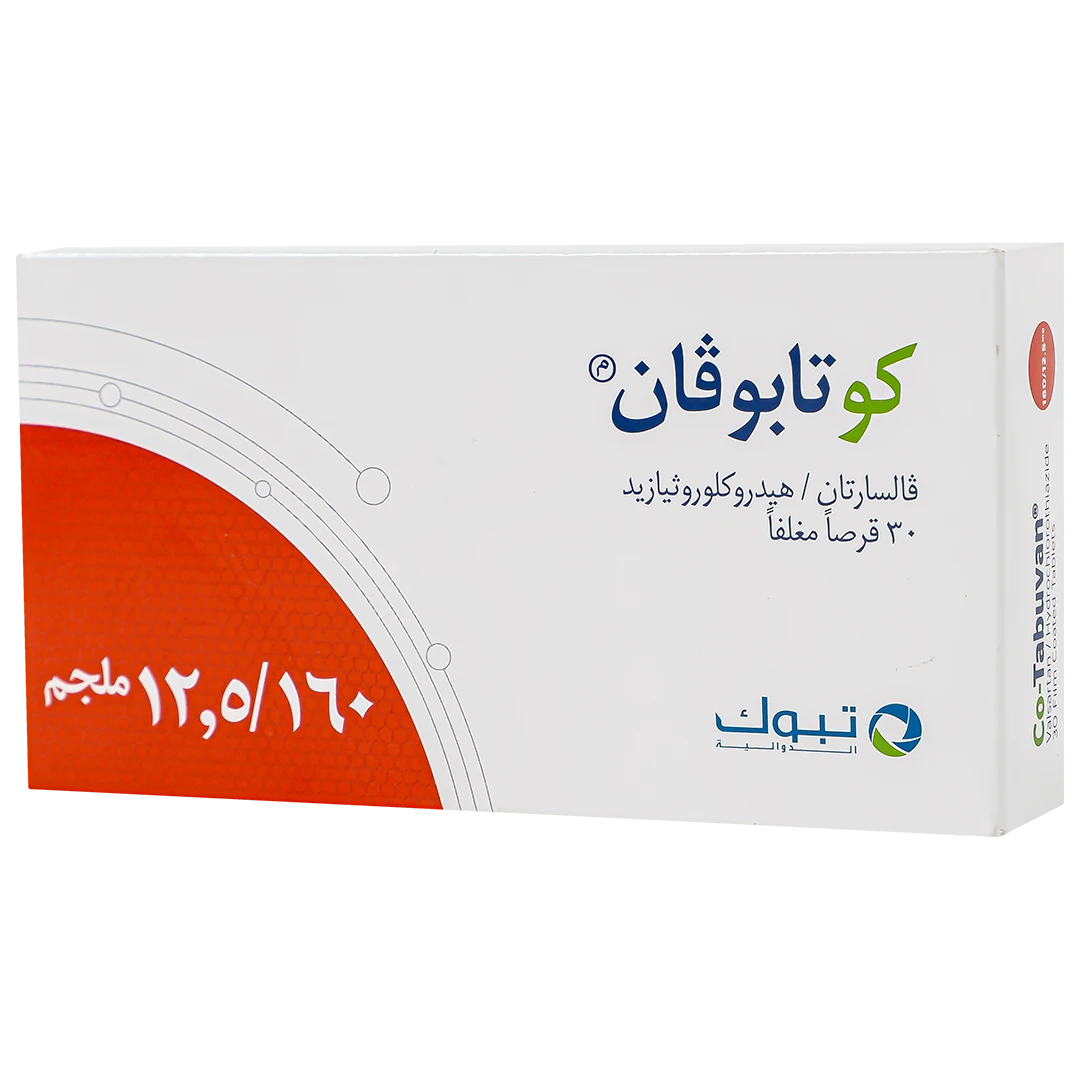
Co-Tabuvan 12.5/160 Tablets is used to treat high blood pressure in adults and reduces the risk of heart attack and stroke and also reduces the risk of death from heart disease. Valsartan: It prevents the binding of angiotensin II to its receptors in blood vessels. Angiotensin II is a hormone that causes blood vessels to narrow, leading to high blood pressure. Valsartan works to relax blood vessels and lower blood pressure by preventing this hormone from binding to its receptors. Hydrochlorothiazide: It causes increased excretion of sodium and water in the urine. This reduces the volume of fluid in the body, which helps lower blood pressure. Hydrochlorothiazide also increases the effectiveness of valsartan in lowering blood pressure. How to use Always use this medicine exactly as your doctor has told you. This will help you achieve the best possible result and reduce the risk of side effects. Contact a doctor or pharmacist if you are not sure. People with high blood pressure often do not notice symptoms. Many people feel well. So it is very important to keep appointments with your doctor even if you feel well. Your doctor will tell you exactly how many valsartan/hydrochlorothiazide tablets to take. Depending on how you respond to treatment, your doctor may suggest a higher or lower dose. The recommended dose of Valsartan/Hydrochlorothiazide is one tablet daily. Do not change the dose or stop treatment without consulting your doctor. The medication should be taken at the same time each day, usually in the morning. You can take valsartan/hydrochlorothiazide regardless of meals. The tablet should be swallowed with a glass of water. Warnings and precautions Do not use valsartan/hydrochlorothiazide: If you are allergic (hypersensitive) to valsartan, hydrochlorothiazide, sulfonamide derivatives (compounds chemically related to hydrochlorothiazide), or any of the other ingredients of this medicine. If you are more than 3 months pregnant (valsartan/hydrochlorothiazide should also be avoided in early pregnancy - see Pregnancy and breast-feeding section) If you have serious liver disease, damage to the small bile ducts in your liver (biliary cirrhosis) leads to a buildup of bile in your liver (cholestasis). If you have serious kidney disease If you are not passing urine (anuria) If you are undergoing dialysis treatment If you have very low levels of potassium or sodium in your blood, or if you have too much calcium in your blood, despite treatment for this If you have gout If you have diabetes or decreased kidney function and are being treated with a high blood pressure medicine that contains aliskiren If any of the above apply to you, call your doctor and do not take valsartan/hydrochlorothiazide. Side Effects If you experience any of the following symptoms you should contact your doctor or go to the hospital straight away: Dizziness. Fatigue. Dry mouth. Diarrhea. Dizziness. Headache. Muscle pain. Nausea. Vomiting. Constipation. Cough. Storage Information Store at room temperature. Don't cool it. Store in original package to protect from moisture. Drug Interactions Talk to your doctor: If you are taking potassium-sparing medications, potassium supplements, salt substitutes that contain potassium, or other medications that increase the level of potassium in your blood, such as heparin. Regular monitoring of your blood potassium level may be necessary Ingredients The active ingredients are a combination of two drugs: Valsartan/hydrochlorothiazide.
We are Sorry, this product is unavailable now, explore other products.