
Product
Product
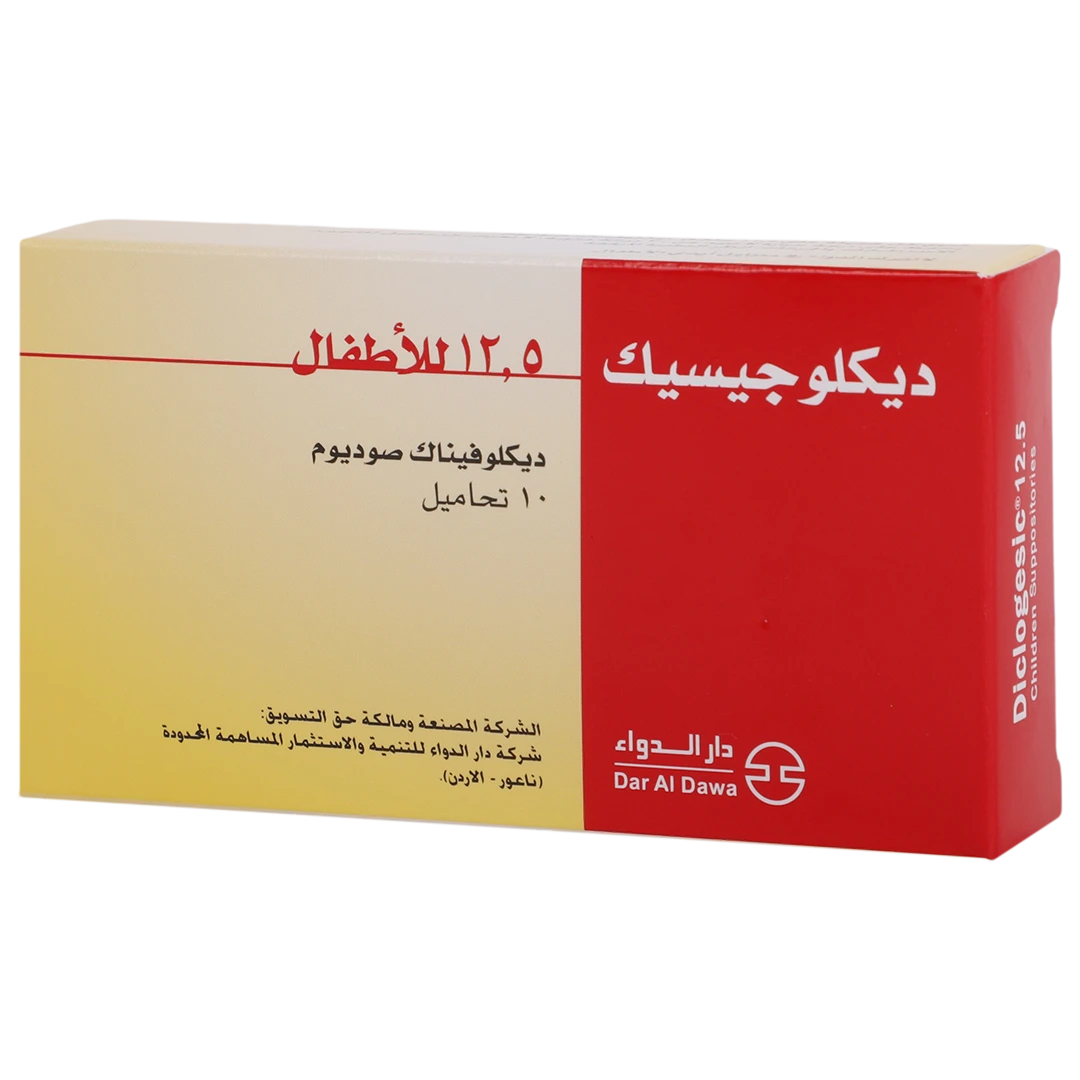
Diclofenac sodium, the active ingredient in Diclogesic® Suppositories, is one of a group of medicines called non-steroidal anti-inflammatory drugs (NSAIDs). NSAIDs reduce pain and inflammation. In children aged 1 to 12: Diclogesic® Suppositories 12.5 are used to treat juvenile chronic arthritis. In children aged over 6 they can also be used alone, or in combination with other painkillers, for the short-term treatment of any pain experienced after an operation. How to use Suppositories are designed for insertion into the back passage (rectum). Never take them by mouth. Children For the treatment of chronic juvenile arthritis in children aged 1 to 12: Doses vary with age, but are usually between 1 and 3 mg/kg body weight every day divided into 2 or 3 doses. For the treatment of post-operative pain in children aged 6 and over: Doses vary with age, but are usually between 1 and 2 mg/kg body weight per day divided into 2 or 3 doses for no more than 4 days. How to insert the suppositories Empty your bowels before inserting a suppository. Wash your hands. Take out the strip of suppositories and tear off one along the perforation. Then take the suppository out of the plastic wrapping by pulling back the loose end. Lie on one side with your knees pulled up towards your chest. Gently push the suppository pointed end first into your back passage (rectum) with your finger. Push the suppository in as far as possible Lower your legs and, if possible, stay still for a few minutes. If you feel as if you need to push the suppository out, try to resist this by lying still with your buttocks pressed together. It is important to keep the suppository in the rectum to allow it to melt and the medicine to be absorbed. Pushing the suppository high into the rectum with your finger will help to reduce this feeling Wash your hands. Warnings and precautions Do not use Diclogesic® Suppositories Some people MUST NOT use Diclogesic® Suppositories. Talk to your doctor if: You think you may be allergic to diclofenac sodium, aspirin, ibuprofen or any other NSAID, or to any of the other ingredients of Diclogesic® Suppositories. You have now, or have ever had, a stomach (gastric) or duodenal (peptic) ulcer, or bleeding in the digestive tract You have had stomach or bowel problems after you have taken other NSAIDs You have severe heart, kidney or liver failure If you have or have had problems with your blood circulation (peripheral arterial disease) You are more than six months pregnant You suffer from ineffectual straining to empty the bowels, diarrhoea or rectal bleeding Other special warnings You should take the lowest dose of diclofenac sodium for the shortest possible time, particularly if you are underweight or elderly. There is a small increased risk of heart attack or stroke when you are taking any medicine like diclofenac sodium. Whilst you are taking these medicines your doctor may want to give you a check-up from time to time. If you have a history of stomach problems when you are taking NSAIDs, particularly if you are elderly, you must tell your doctor straight away if you notice any unusual symptoms. Diclogesic® Suppositories 12.5 mg are not used for adults. Side Effects Stop using the suppositories and tell your doctor straight away if you notice: Stomach pain, indigestion, heartburn, wind, nausea (feeling sick) or vomiting (being sick) Any sign of bleeding in the stomach or intestine, for example, when emptying your bowels, blood in vomit or black, tarry faeces Allergic reactions which can include skin rash, itching, bruising, painful red areas, peeling or blistering Wheezing or shortness of breath (bronchospasm) Swollen face, lips, hands or fingers Yellowing of your skin or the whites of your eyes Persistent sore throat or high temperature An unexpected change in the amount of urine produced and/or its appearance. The side effects listed below have also been reported. Common side effects (These may affect between 1 and 10 in every 100 patients): Stomach pain, heartburn , nausea, vomiting, diarrhoea, indigestion, wind, loss of appetite Headache, dizziness, vertigo Skin rash or spots Raised levels of liver enzymes in the blood Irritation where the suppository is inserted Storage Information Do not store above 30°C. Do not freeze. Drug Interactions Some medicines can interfere with your treatment. Tell your doctor or pharmacist if you are taking any of the following: Medicines to treat diabetes Anticoagulants (blood thinning tablets like warfarin) Diuretics (water tablets) Lithium (used to treat some mental problems) Methotrexate (for some inflammatory diseases and some cancers) Ciclosporin and tacrolimus (used to treat some inflammatory diseases and after transplants) Trimethoprim (a medicine used to prevent or treat urinary tract infections) Quinolone antibiotics (for infections) Any other NSAID or COX-2 (cyclo-oxgenase-2) inhibitor, for example aspirin or ibuprofen Mifepristone (a medicine used to terminate pregnancy) Cardiac glycosides (for example digoxin), used to treat heart problems Medicines known as SSRIs used to treat depression Oral steroids (an anti-inflammatory drug) Ingredients Each suppository contains 12.5 mg Diclofenac sodium The other ingredients are: Silica colloidal anhydrous, L-arginine, white beeswax, hard fat. Specifications Diclogesic® Suppositories are white to off-white, torpedo – shaped suppositories.
We are Sorry, this product is unavailable now, explore other products.