
Product
Product
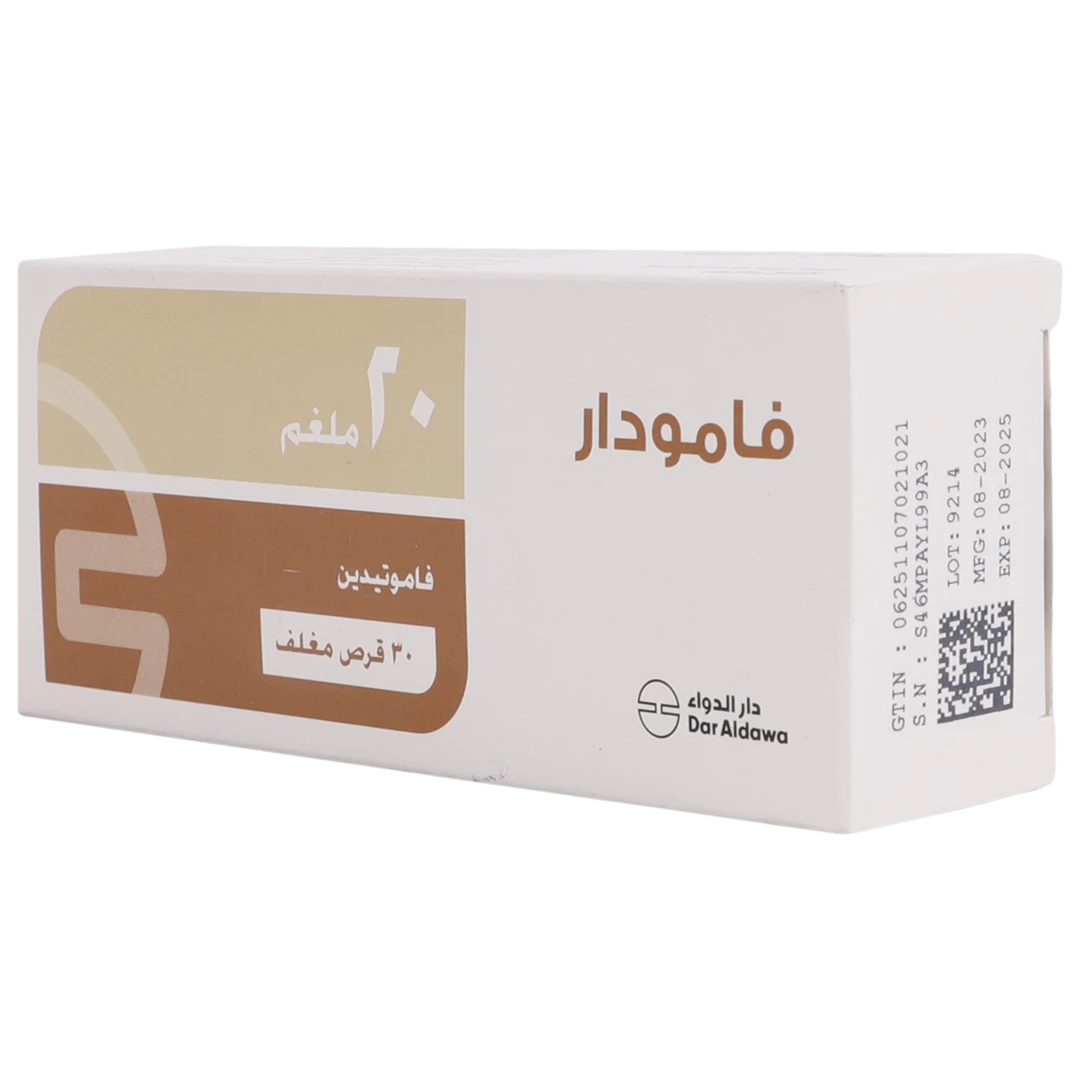
Famodar® belongs to a group of medicines called histamine (H2) antagonists or anti-ulcer medicines. These anti-ulcer medicines control the levels of acid in the stomach. Famodar® can lower the amount of acid you produce in your stomach. Famodar® can be used for the following: To help treat non-cancerous stomach ulcers and ulcers in the first part of your intestine (duodenal ulcers) To help prevent the return of ulcers in the first part of the intestine To help treat Zollinger-Ellison syndrome (with a condition caused by too much stomach acid) To help treat acid reflux (burning pain caused by stomach acid escaping back up the food pipe) and the symptoms of an inflamed food pipe (oesophagitis) How to use Famodar® Tablets can be taken before or after food. Use in adults (including the elderly) Non-cancerous stomach or intestinal ulcers - The recommended dose is 40 mg of famotidine taken at night. In some cases treatment may last for up to 8 weeks. To prevent intestinal ulcers from returning - The recommended dose is 20 mg of famotidine at bedtime. To treat Zollinger-Ellison syndrome - The recommended starting dose is 20 mg of famotidine every 6 hours. Your doctor may need to increase this dose further depending how well the ulcers are healing. If you have already been taking a similar medicine or your symptoms are severe, your doctor may start you on a higher dose of famotidine. To treat mild symptoms of oesophagitis (inflammation of the food pipe), due to acid reflux - The recommended dose is 20 mg of famotidine twice daily. Treatment usually lasts for 6 weeks, but if necessary, for 12 weeks. To treat more severe symptoms of oesophagitis (inflammation of the food pipe) – The recommended dose is 40 mg of famotidine twice daily. Treatment usually lasts for 6 weeks, but if necessary, for 12 weeks. Use in people with kidney problems If you suffer from kidney problems, your doctor may give you a lower dose of Famodar®. If you are having dialysis, your doctor may advise you to take a 20 mg tablet after dialysis. Use in children and adolescents Famodar® should not be given to children or adolescents. Warnings and precautions Do not take Famodar® if: You are allergic to famotidine or any of the ingredients of this medicine (listed in section 6) or to any other medicines called H2 antagonists Warnings and precautions Talk to your doctor or pharmacist before taking Famodar® if: You have kidney problems Famodar® may hide the symptoms of other diseases. Your doctor may carry out tests to diagnose your condition and/or exclude other diseases before you start taking Famodar®. Side Effects Stop taking Famodar® and contact your doctor or go to your nearest hospital emergency department immediately if you notice any of the following: Very rare (may affect up to 1 in 10,000 people) A serious allergic reactions including rash, itching or hives, shortness of breath, wheezing or trouble breathing, or swelling of the face, hands, feet, mouth, throat or eyes. Yellowing of the skin or whites of the eyes, dark urine, pale stools, persistent lack of appetite or abdominal pain which may be signs of serious liver problems. A severe blistering rash with bleeding in the lips, eyes, mouth, nose and genitals or severe skin reactions which starts with painful red areas or severe skin reactions which starts with painful red areas, then large blisters and ends with peeling of the surface layers of the skin. You may have Stevens-Johnson syndrome or condition known as Toxic Epidermal Necrolysis (TEN), which may be life-threatening. Other side effects Common (may affect up to 1 in 10 people) Headache Dizziness Constipation Diarrhoea Storage Information Protect from light. Store in a dry place. Do not store above 30°C. Drug Interactions Tell your doctor or pharmacist if you are taking, have recently taken or might take any other medicines, especially any of the following: Itraconazole or ketoconazole, medicines used to treat fungal infections. Take ketoconazole 2 hours before your famotidine dose Probenecid, a medicine used to treat gout Antacids. Take your famotidine dose one to two hours before an antacid Sucralfate, a medicine used for stomach ulcers. Do not take sucralfate within two hours of your famotidine dose Famodar® may decrease the effect of posaconazole oral suspension (a drinkable medicine used to prevent and treat some fungal infections). Famodar® may decrease the effect of dasatinib, erlotinib, gefitinib, pazopanib (medicines used to treat cancer). Atazanavir, used in the treatment of HIV Calcium carbonate, when used as a medicine for high blood phosphate levels (hyperphosphataemia) in patients on dialysis Ingredients The active substance in Famodar® is famotidine. The other ingredients are: microcrystalline cellulose, pregelatinized starch, magnesium stearate, talc, hypromellose, titanium dioxide, macrogol, sunset yellow (E110). Famodar® 40mg tablets also contain red carmiosine (E122) and indigo carmine (E132). Specifications Famodar® 20mg tablets are yellow orange round normal biconvex film coated tablets, coded (FAM 20) on one side, plain on the other side.
We are Sorry, this product is unavailable now, explore other products.