
Product
Product
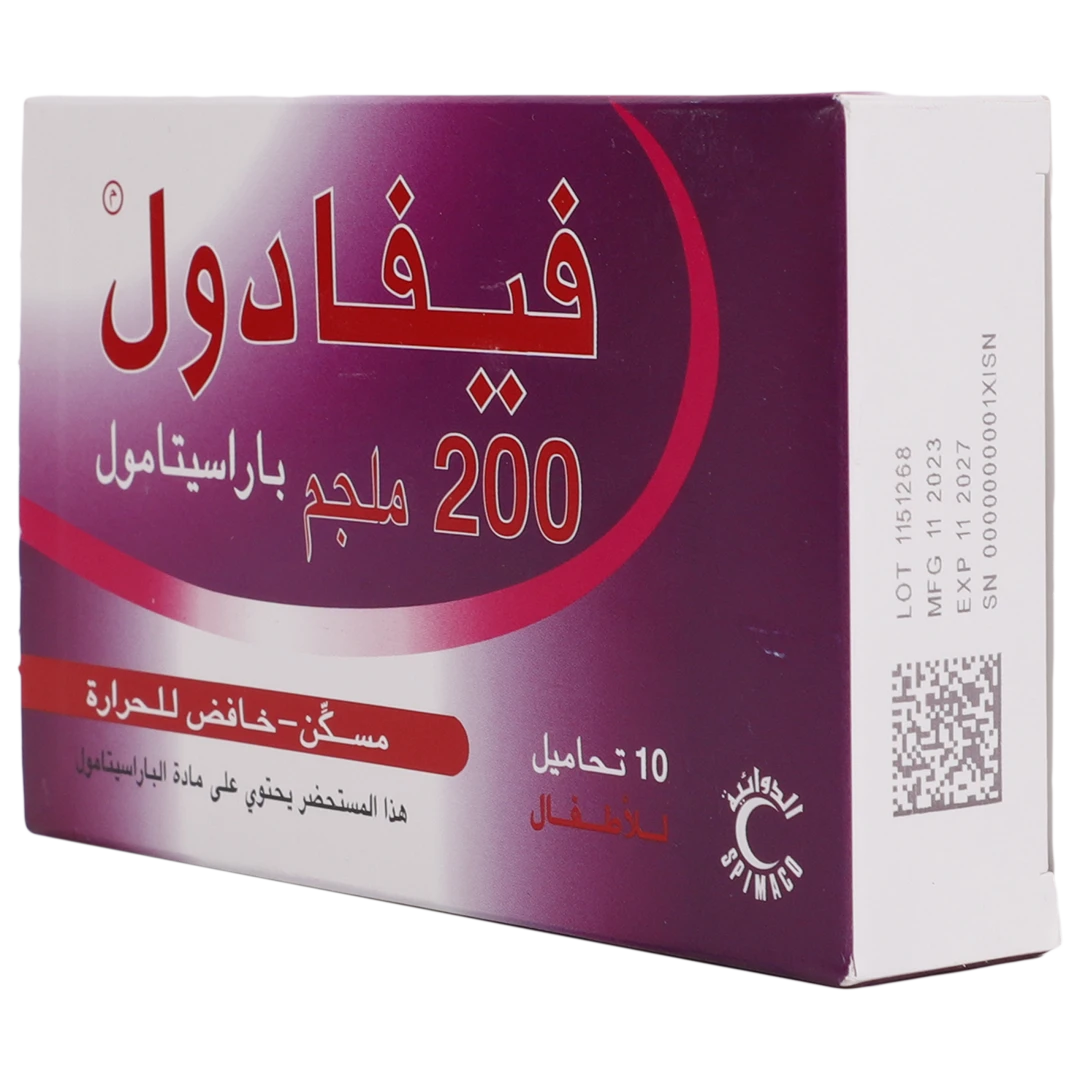
A suppository is a small, cone-shaped medicine which is inserted into the back passage (rectum). Fevadol Suppositories contain a medicine called paracetamol. This belongs to a group of medicines called pain-killers (analgesics). Fevadol Suppositories are used to treat pain and high temperature (fever) in children from 1 to 12 years of age. They are used by children who find it difficult to take paracetamol as tablets or syrup. How to use Use in children aged 1 to 5 years Fevadol Suppositories 100 mg and 200 mg are for children aged from 1 to 5 years. The number of suppositories to give your child depends on his age and weight. The recommended dose is one or two suppositories. You should ask your child’s doctor or pharmacist for advice on how many suppositories to give. Use in children aged 6 to 12 years Fevadol Suppositories 350 mg are for children aged from 6 to 12 years. The number of suppositories to give your child depends on their age and weight. The recommended dose is one or two suppositories. You should ask your child’s doctor or pharmacist for advice on how many suppositories to give. You must leave at least 4 hours between each dose. How to use Fevadol Suppositories 1. Your child’s bowels need to be empty when you give them this medicine. If your child needs to go to the toilet, make sure that they do it before you give them the suppository. 2. You may find it easier to give your child the suppository if they are lying on their front or side on a bed. Do whichever is more comfortable for your child. 3. Wash your hands. Then peel the wrapping apart to take out the suppository. Do not break the suppository before use. 4. Gently push the suppository into your child’s back passage (rectum) with the pointed end first. Then wash your hands. 5. Try to keep your child still for a minute or two. 6. If your child needs to be given another suppository, remove another one from the wrapper. Then insert it into your child’s back passage as before. Once again you should try to keep your child still for a minute or two. Then wash your hands. Warnings and precautions Do not give Fevadol Suppositories to your child: If he is allergic to paracetamol or to the other ingredient of this medicine (listed in section 6). Warnings and precautions Talk to your child’s doctor or pharmacist before using these suppositories: If your child has liver or kidney problems. If your child is taking other medicines which can affect his liver (see ‘Other medicines and Fevadol Suppositories’ section). Side Effects Like all medicines, this medicine can cause side effects, although not everybody gets them. The following side effects can happen with this medicine. Common (may affect up to 1 in 10 people) Redness or soreness in or around the back passage. Rare (may affect up to 1 in 1,000 people) Allergic reactions such as swelling of the face, lips, tongue or throat. Skin problems such as a rash or itching. Blood problems. If these happen, your child may bruise or bleed more easily, get infections more easily, or get a high temperature (fever) and ulcers in the mouth and throat. Liver problems (your child may need to have blood tests to check how well their liver is working). Very rare cases of serious skin reactions have been reported. Storage Information Store in a refrigerator for 30 minutes prior to use. Store below 25°C. Drug Interactions In particular, tell your child’s doctor or pharmacist if your child is taking any of the following: Other medicines that contain paracetamol – do not give your child Fevadol suppositories at the same time. Barbiturates (a type of sedative). Medicines for epilepsy or fits (also called ‘anti-convulsants’). Medicines such as warfarin for treating blood clots. Chloramphenicol (a medicine used to treat bacterial infections). Probenecid (a medicine used to prevent gout and, occasionally, to increase blood levels of the antibiotic penicillin). Please inform your doctor or pharmacist if you are taking: Flucloxacillin (antibiotic), due to a serious risk of blood and fluid abnormality (high anion gap metabolic acidosis) that must have urgent treatment and which may occur particularly in case of severe renal impairment, sepsis (when bacteria and their toxins circulate in the blood leading to organ damage), malnutrition, chronic alcoholism, and if the maximum daily doses of paracetamol are used. Phenytoin may reduce the analgesic and antipyretic effects of paracetamol and may increase risk of hepatotoxicity. Ingredients The active substance is paracetamol. Specifications Fevadol 200mg Supp.: White to off-white, torpedo shaped suppositories.
We are Sorry, this product is unavailable now, explore other products.