
Product
Product
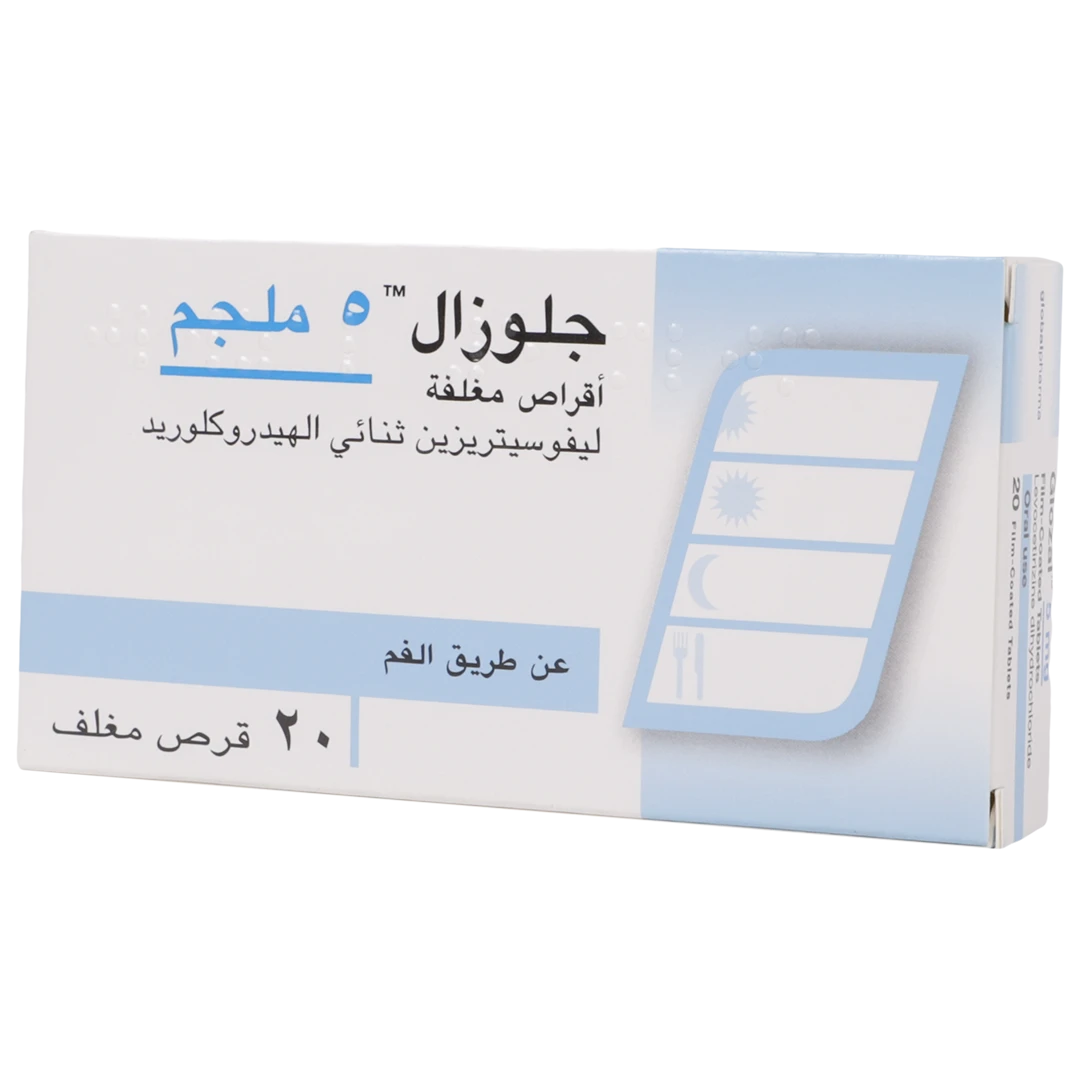
Levocetirizine dihydrochloride is the active ingredient of Glozal. Glozal is an antiallergic medication. For the treatment of signs of illness (symptoms) associated with: Allergic rhinitis (including persistent allergic rhinitis); Nettle rash (urticaria). How to use The recommended dose for adults and children aged 6 years and over is one tablet daily. Special dosage instructions for specific populations: Renal and hepatic impairment Patients with impaired kidney function may be given a lower dose according to the severity of their kidney disease, and in children the dose will also be chosen on the basis of body weight; the dose will be determined by your doctor. Patients who have severe impairment of kidney function must not take Glozal. Patients who only have impaired liver function should take the usual prescribed dose. Patients who have both impaired liver and kidney function may be given a lower dose depending on the severity of the kidney disease, and in children the dose will also be chosen on the basis of body weight; the dose will be determined by your doctor. Elderly patients aged 65 years and above No adaptation of the dose is necessary in elderly patients, provided their renal function is normal. Use in children Glozal is not recommended for children under 6 years of age. How and when should you take Glozal? For oral use only. Glozal tablets should be swallowed whole with water and may be taken with or without food. How long should you take Glozal? The duration of use depends on the type, duration and course of your complaints and is determined by your physician. Warnings and precautions Do not take Glozal in the following cases: If you are allergic to levocetirizine dihydrochloride, to cetirizine, to hydroxyzine or any of the other ingredients of this medicine (listed in section 6). If you have a severe impairment of kidney function (severe renal failure with creatinine clearance below 10 ml/min). Warnings and precautions Talk to your doctor or pharmacist before taking Glozal. If you are likely to be unable to empty your bladder (with conditions such as spinal cord injury or enlarged prostate), please ask your doctor for advice. If you suffer from epilepsy or are at risk of convulsions, please ask your doctor for advice as use of Glozal may cause seizure aggravation. If you are scheduled for allergy testing, ask your doctor if you should stop taking Glozal for several days before testing. This medicine may affect your allergy test results. Side Effects Like all medicines, this medicine can cause side effects, although not everybody gets them. Common ( may affect up to 1 in 10 people ): Dry mouth, headache, tiredness and somnolence/drowsiness Uncommon (may affect up to 1 in 100 people ) : Exhaustion and abdominal pain Other side effects such as palpitations, increased heart rate, fits, pins and needles, dizziness, syncope, tremor, dysgeusia (distortion of the sense of taste), sensation of rotation or movement, visual disturbances, blurred vision, painful or difficult urination, inability to completely empty the bladder, oedema, pruritus (itchiness), rash, urticaria (swelling, redness and itchiness of the skin), skin eruption, shortness of breath, weight increase, muscular pain, joint pain, aggressive or agitated behaviour, hallucination, depression, insomnia, recurring thoughts of or preoccupation with suicide, nightmare, hepatitis, abnormal liver function, vomiting, increased appetite, nausea and diarrhoea have also been reported. Storage Information Do not store above 30 ͦ C. Store in a dry place. Drug Interactions Tell your doctor or pharmacist if you are taking, have recently taken or might take any other medicines. Ingredients The active substance is levocetirizine dihydrochloride.
We are Sorry, this product is unavailable now, explore other products.