
Product
Product
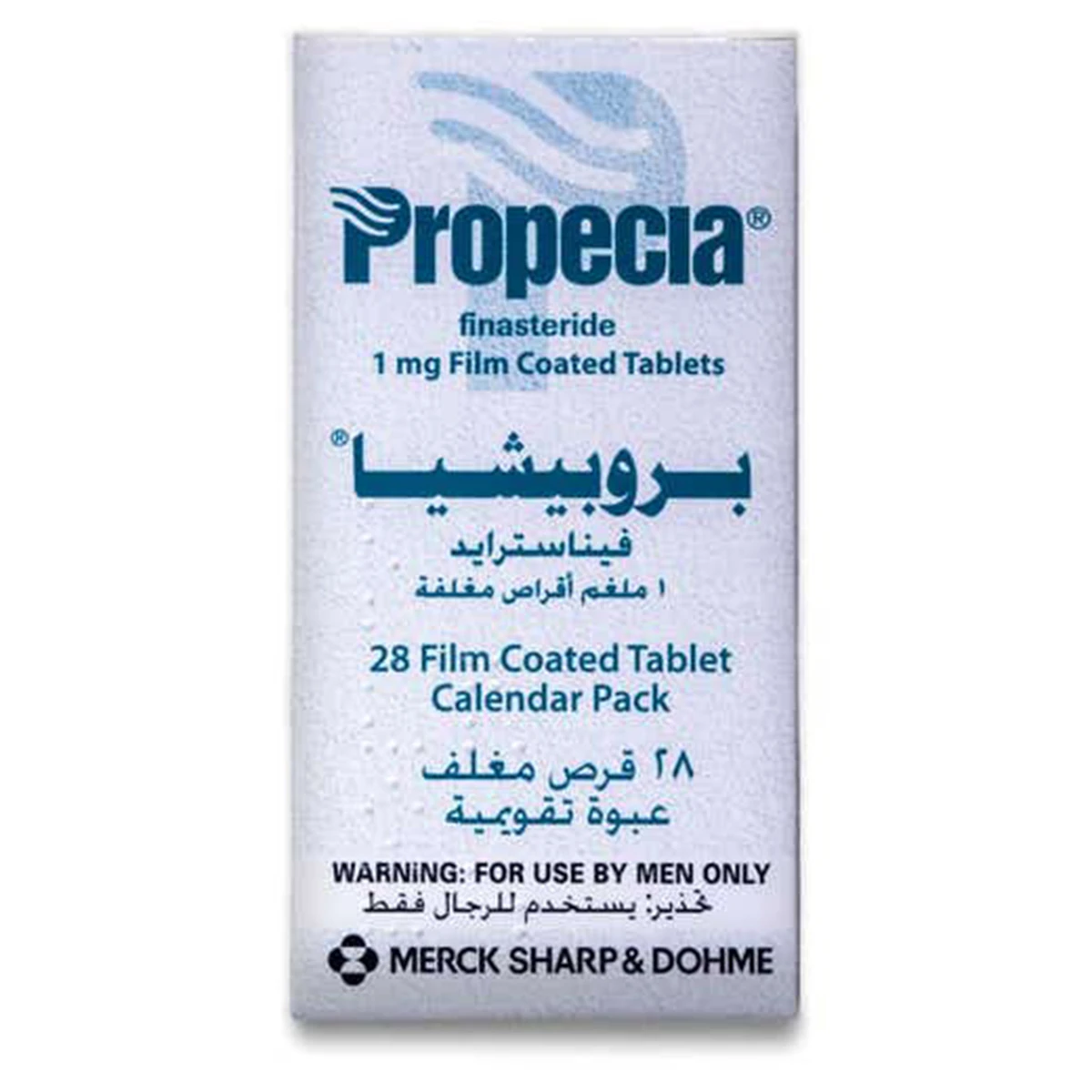
Propecia contains a medicine called finasteride. This belongs to a group of medicines called Type II ‘5-alpha reductase inhibitors’. Propecia is used for the treatment of male pattern hair loss (also known as androgenetic alopecia). Propecia increases hair growth on the scalp and prevents further hair loss in men. Men with mild to moderate, but not complete hair loss, can benefit from using Propecia. Propecia lowers the levels of DHT in the scalp. This helps to reverse the balding process, leading to an increased hair growth and prevention of further hair loss. How to use Always take this medicine exactly as your doctor or pharmacist has told you. Check with your doctor or pharmacist if you are not sure. The recommended dose is one tablet each day. The tablet can be taken with or without food. If you take more Propecia than you should If you take too many tablets by mistake, contact your doctor immediately. Propecia will not work faster or better if you take it more than once a day. If you forget to take Propecia Do not take a double dose to make up for a forgotten dose. If you stop taking Propecia It may take 3 to 6 months for the full effect to develop. It is important to keep taking Propecia for as long as your doctor tells you. If you stop taking Propecia, you are likely to lose the hair you have gained within 9 to 12 months. If you have any further questions on the use of this medicine, ask your doctor or pharmacist. Warnings and precautions Do not take Propecia: If you are a woman (because this medicine is for men). It has been shown in clinical trials that Propecia does not work in women with hair loss. If you are allergic (hypersensitive) to finasteride or any of the other ingredients of this medicine. If you are already taking finasteride or dutasteride used for a prostate problem called benign prostatic hyperplasia (BPH). Do not take Propecia if any of the above applies to you. If you are not sure, talk to your doctor or pharmacist. Warnings and Precautions Talk to your doctor or pharmacist before taking Propecia if: You are going to have a blood test for prostate cancer called PSA (prostate-specific antigen). This is because Propecia can affect the result of this test. Side Effects Like all medicines, this medicine can cause side effects, although not everybody gets them. Some of the side effects are temporary with continued treatment or disappeared when treatment is stopped. Stop taking Propecia and talk to your doctor if you experience: Symptoms of an allergic reaction: swelling of your lips, face, tongue and throat; difficulty swallowing; lumps under your skin (hives) and breathing difficulties. Stop taking Propecia and talk to your doctor immediately. Depression (feeling of severe sadness and unworthiness). You should promptly report to your doctor any changes in your breast tissue such as lumps, pain, enlargement or nipple discharge as these may be signs of a serious condition, such as breast cancer. Uncommon: may affect up to 1 in 100 people You may be unable to have an erection (impotence) You may have less desire to have sex You may have problems with ejaculation, for example a decrease in the amount of semen released during sex. This decrease in the amount of semen does not appear to affect normal sexual function Storage Information Store below 30°C. Store in the original package. Drug Interactions Tell your doctor or pharmacist if you are taking, have recently taken or might take any other medicines. Propecia does not usually affect other medicines. Do not take Propecia if you are already taking finasteride or dustasteride, used for a prostate problem called benign prostatic hyperplasia (BPH). No information is available about the use of Propecia with minoxidil, another type of medicine for male pattern hair loss which is applied to the head. Ingredients The active substance is finasteride.
We are Sorry, this product is unavailable now, explore other products.