
Product
Product
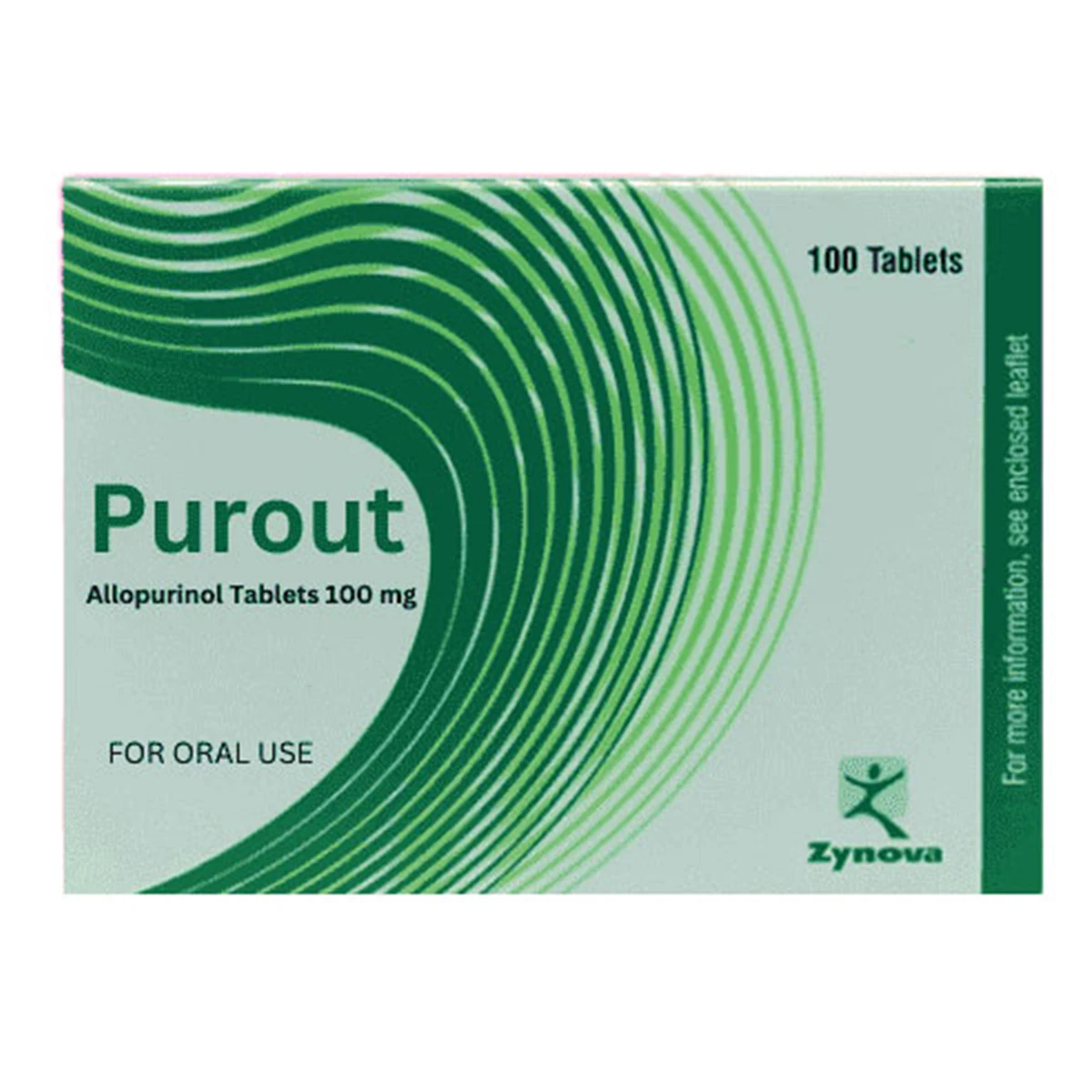
Purout tablets contain a medicine called allopurinol. It works by slowing down the speed of certain chemical reactions in your body to lower the level of uric acid in the blood and urine. Purout is used: To reduce or prevent the formation of urate/uric acid deposition in conditions where your body produces too much of a substance called uric acid. These may include gout or some types of kidney stones or certain other types of kidney problems or when you are having treatment for cancer or some other conditions. In gout the uric acid builds up in your joints and tendons as crystals. These crystals cause an inflammatory reaction. The inflammation causes the skin around certain joints to become swollen, tender and sore when only slightly touched. You can also find you get severe pain when the joint is moved. How to use Always take Purout tablets exactly as your doctor has told you. You should check with your doctor or pharmacist if you are not sure. Take the tablet after food and swallow it with a glass of water. The recommended dose ranges from 100 to 900 mg each day. You will usually start on a low dose, which will be increased if necessary. If you are an older person or if you have reduced liver or kidney function, your doctor may prescribe a lower dose or to take it at longer intervals. If you have dialysis two or three times a week, your doctor may prescribe a dose of 300 or 400 mg which is to be taken straight after your dialysis. Your doctor will usually start with a low dose of allopurinol (e.g. 100 mg/day), to reduce the risk of possible side effects. Your dose will be increased if necessary. Use in children (under 15 years) The usual dose ranges from 100 to 400 mg each day Warnings and precautions Do not take Purout tablets if: are allergic (hypersensitive) to allopurinol or any of the other ingredients (see section 6). If you are not sure, talk to your doctor or pharmacist before taking Purout. Warnings and Precautions Talk to your doctor or pharmacist before taking your medicine if: you are of Han Chinese, African or Indian origin you have problems with your liver or kidneys Your doctor may give you a lower dose or ask you to take it less often than each day. They will also monitor you more closely. you have heart problems or high blood pressure and you take diuretics and/or a medicine called ACE-inhibitors you are currently having an attack of gout. you have thyroid problems Take special care with Purout: Serious skin rashes (Hypersensitivity syndrome, Stevens- Johnson syndrome, toxic epidermal necrolysis) have been reported in patients taking allopurinol. Frequently, the rash can involve ulcers of the mouth, throat, nose, genitals and conjunctivitis (red and swollen eyes). These serious skin rashes are often preceded by influenza-like symptoms fever, headache, body ache (flu-like symptoms). The rash may progress to widespread blistering and peeling of the skin. These serious skin reactions can be more common in people of Han Chinese, Thai or Korean origin. Chronic kidney disease may increase the risk in these patients additionally. If you develop a rash or these skin symptoms, stop taking allopurinol and contact your doctor immediately. If you have cancer or Lesch-Nyhan syndrome the amount of uric acid may increase in your urine. To prevent this, you need to assure to drink sufficiently to dilute your urine. In case you have kidney stones, the kidney stones will become smaller and may enter your urinary tract. Side Effects Like all medicines, this medicine can cause side effects, although not everybody gets them. The following side effects may happen with this medicine: Hypersensitivity Uncommon (may affect less than 1 in 100 people) If you have a hypersensitivity (allergic) reaction, stop taking Purout and see a doctor straight way. The signs may include: flaking skin, boils or sore lips and mouth Very rarely signs may include sudden wheeziness, fluttering or tightness in the chest and collapse. Other side effects Common (may affect up to 1 in 10 people). Skin rash Increased level of thyroid stimulating hormone in the blood. Storage Information Store below 30°C. Protect from light and moisture. Drug Interactions Tell your doctor or pharmacist if you are taking any of the following: aspirin theophylline, used for breathing problems medicines used for fits (epilepsy), phenytoin idarabine, used to treat herpes or chickenpox antibiotics (ampicillin or amoxicillin) didanosine, used to treat HI infection medicines used for cancer medicines used to reduce your immune response (immunosuppressants) medicines used to treat diabetes medicines for heart problems or high blood pressure such as ACE inhibitors or water tablets (diuretics) medicines used to thin your blood (anticoagulants), such as warfarin any other medicine to treat gout. Ingredients The active substance is Allopurinol (Micronised). The other ingredients are Microcrystalline Cellulose, Croscarmellose Sodium, Purified Water, Povidone (PVPK-30), and magnesium stearate. Specifications Tablets are white to off-white, round shaped, biconvex uncoated tablets having AP embossing and central break line on one side and plain on other side
We are Sorry, this product is unavailable now, explore other products.