
Product
Product
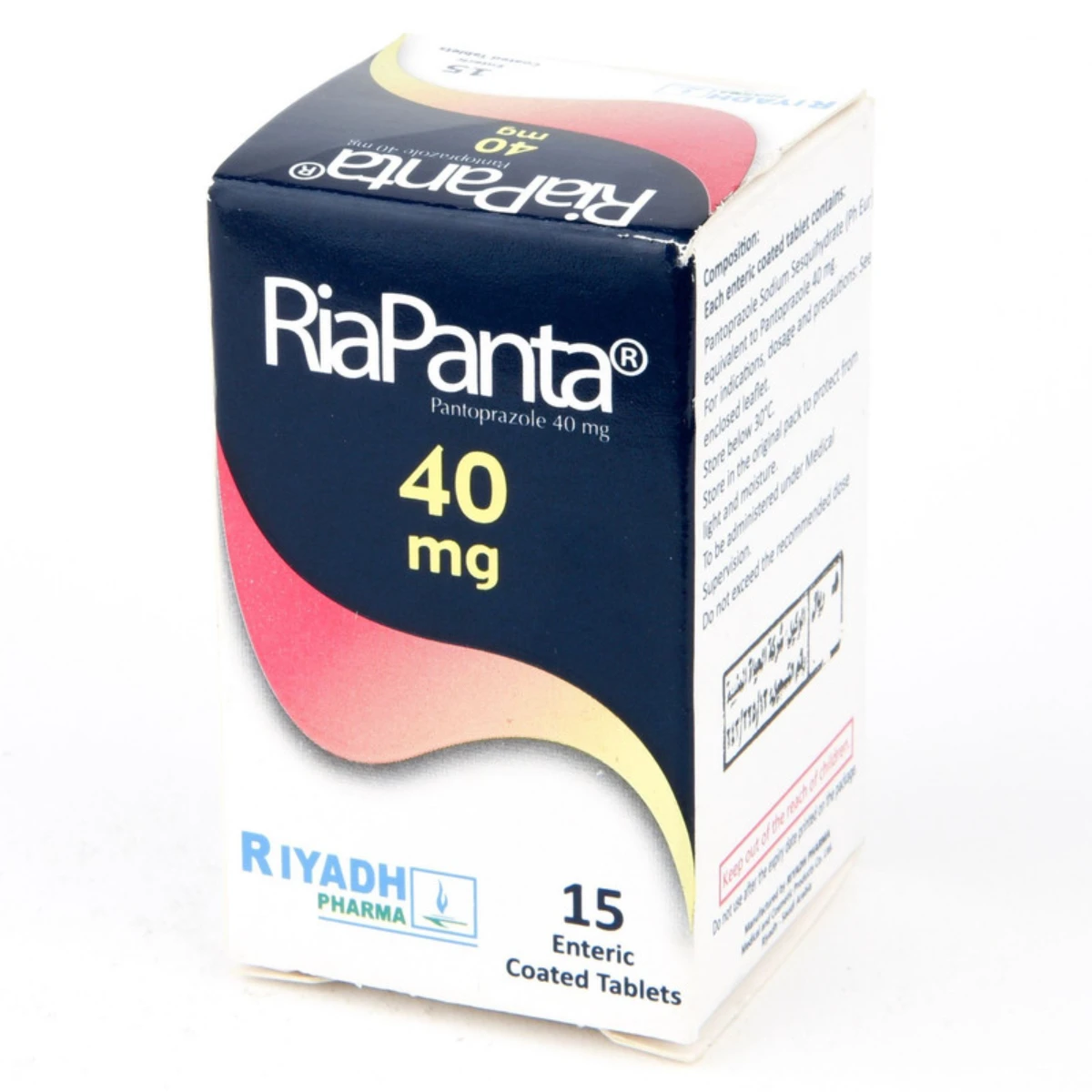
Riapanta is used to treat Adults and adolescents 12 years of age and above for: - Reflux oesophagitis. An inflammation of your oesophagus (the tube which connects your throat to your stomach) accompanied by the regurgitating of stomach acid. Riapanta is used to treat adults for : - An infection with a bacterium called Helicobacter pylori in patients with duodenal ulcers and stomach ulcers in combination with two antibiotics (Eradication therapy). The aim is to get rid of the bacteria and so reduce the likelihood of these ulcers returning. - Stomach and duodenal ulcers - Zollinger-Ellison syndrome and other conditions producing too much acid in the stomach. How to use Take the tablets 1 hour before a meal without chewing or breaking them and swallow them whole with some water. The recommended dose is : Adults and adolescents 12 years of age and above: - To treat reflux oesophagitis: The usual dose is one tablet a day. Your doctor may tell you to increase to 2 tablets daily. The treatment period for reflux oesophagitis is usually between 4 and 8 weeks. Your doctor will tell you how long to take your medicine. Adults: - For the treatment of an infection with a bacterium called Helicobacter pylori in patients with duodenal ulcers and stomach ulcers in combination with two antibiotics (Eradication therapy): One tablet, two times a day plus two antibiotic tablets of either amoxicillin, clarithromycin and metronidazole (or tinidazole), each to be taken two times a day with your Riapanta tablet. Take the first Riapanta tablet 1 hour before breakfast and the second Riapanta tablet 1 hour before your evening meal. Follow your doctor’s instructions and make sure you read the package leaflets for these antibiotics. The usual treatment period is one to two weeks. Warnings and precautions Do not take Riapanta - If you are allergic (hypersensitive) to Pantoprazole or to any of the other ingredients of Riapanta. - If you are allergic to medicines containing other proton pump inhibitors. Side Effects Serious allergic reactions (frequency rare may affect up to 1 in 1,000 people): swelling of the tongue and/or throat, difficulty in swallowing, hives (nettle rash), difficulties in breathing, allergic facial swelling (Quincke’s disease / angioedema), severe dizziness with very fast heartbeat and heavy sweating. - Serious skin conditions (frequency not known: frequency cannot be estimated from the available data): blistering of the skin and rapid deterioration of your general condition, erosion (including slight bleeding) of eyes, nose, mouth/lips or genitals (Stevens-Johnson-Syndrome, Lyell-Syndrome, Erythema multiforme) and sensitivity to light. - Other serious conditions (frequency not known: frequency cannot be estimated from the available data): yellowing of the skin or whites of the eyes (severe damage to liver cells, jaundice) or fever, rash, and enlarged kidneys sometimes with painful urination and lower back pain (serious inflammation of the kidneys). possibly leading to kidney failure. Other known side effects are: - Common (may affect up to 1 in 10 people) Benign polyps in the stomach. Storage Information Keep out of the reach children. - Store below 30°C. - Store in the original package in order to protect from light and moisture. - Do not use RIAPANTA after the expiry date which is stated on the blister or the package. Drug Interactions Tell your doctor or pharmacist if you are taking, have recently taken or might take any other medicines, including medicines obtained without a prescription. Riapanta may influence the effectiveness of other medicines, so tell your doctor if you are taking: - Medicines such as ketoconazole, itraconazole and posaconazole (used to treat fungal infections) or erlotnib (used for certain types of cancer) because Riapanta may stop these and other medicines from working properly. - Warfarin and phenprocoumon, which affect the thickening or thinning of the blood. You may need further checks. - Atazanavir (used to treat HIV-infection). - Methotrexate (used to treat rheumatoid arthritis, psoriasis, and cancer) – if you are taking methotrexate your doctor may temporarily stop your Riapanta treatment because Riapanta can increase levels of methotrexate in the blood. - Fluvoxamine (used to treat depression and other psychiatric diseases) – if you are taking fluvoxamine your doctor may reduce the dose. - Rifampicin (used to treat infections). - St John’s wort (Hypericum perforatum) (used to treat mild depression). Ingredients Each enteric coated tablet contains Pantoprazole Sodium Sesquihydrate (Ph Eur) equivalent to Pantoprazole 40 mg. Specifications Light yellow colored, round biconvex enteric-coated tablets with RP and 101 on either side of the tablet.
We are Sorry, this product is unavailable now, explore other products.