
Product
Product
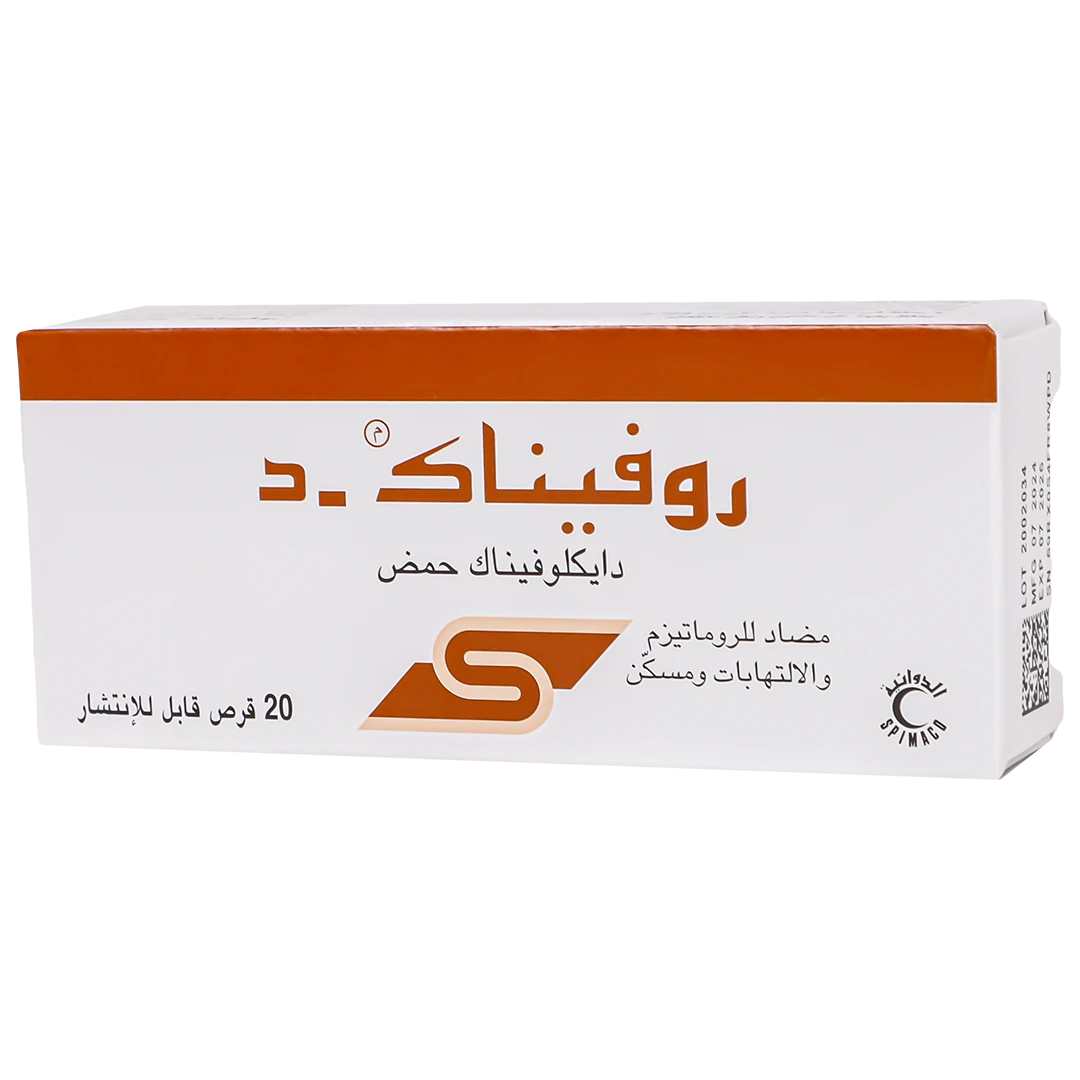
Diclofenac free acid, the active ingredient in Rofenac-D Tablets, is one of a group of medicines called non-steroidal anti-inflammatory drugs (NSAIDs). NSAIDs reduce pain and inflammation. How to use Take the tablets before or with food. Drop the tablets into a glass of water, and stir. Drink at once. To make sure you get all of the medicine, rinse the glass round with a small amount of water and drink this as well. The usual doses are: Adults One tablet two or three times a day. Elderly Your doctor may advise you to take a dose that is lower than the usual adult dose if you are elderly. Your doctor may also want to check closely that the Rofenac-D Tablets are not affecting your stomach. Warnings and precautions You should take the lowest dose of Rofenac-D Tablets for the shortest possible time, particularly if you are underweight or elderly. • There is a small increased risk of heart attack or stroke when you are taking any medicine like Rofenac. The risk is higher if you are taking high doses for a long time. Always follow the doctor’s instructions on how much to take and how long to take it for. • Whilst you are taking these medicines your doctor may want to give you a check-up from time to time. • If you have a history of stomach problems when you are taking NSAIDs, particularly if you are elderly, you must tell your doctor straight away if you notice any unusual symptoms. • Because it is an anti-inflammatory medicine, Rofenac-D Tablets may reduce the symptoms of infection, for example headache, and high temperature. If you feel unwell and need to see a doctor, remember to tell him or her that you are taking Rofenac-D Tablets. • Rofenac-D Tablets are not suitable for children. Side Effects Common side effects (These may affect between 1 and 10 in every 100 patients): • Stomach pain, heartburn, nausea, vomiting, diarrhea, indigestion, wind, loss of appetite • Headache, dizziness, vertigo • Skin rash or spots • Raised levels of liver enzymes in the blood Rare side effects (These may affect between 1 in every 1000 to 1 in every 10,000 patients): • Stomach ulcers or bleeding (there have been very rare reported cases resulting in death, particularly in the elderly) • Gastritis (inflammation, irritation or swelling of the stomach lining) • Vomiting blood • Diarrhea with blood in it or bleeding from the back passage • Black, tarry feces or stools • Drowsiness, tiredness • Hypotension (low blood pressure, symptoms of which may include faintness, giddiness or light headedness) • Skin rash and itching • Fluid retention, symptoms of which include swollen ankles • Liver function disorders, including hepatitis and jaundice Storage Information Store below 25°C. Keep out of the reach and sight of children. Do not take Rofenac-D Tablets after the expiry date which is printed on the outside of the pack. Drug Interactions Some medicines can interfere with your treatment. Tell your doctor or pharmacist if you are taking any of the following: • Medicines to treat diabetes. • Anticoagulants (blood thinning tablets like warfarin). • Diuretics (water tablets) various NSAIDs are liable to inhibit the activity of diuretics. • Lithium (used to treat some mental problems) Rofenac-D may increase plasma level of concurrently administered of Lithium. • Methotrexate (for some inflammatory diseases and some cancers). • Ciclosporin or tacrolimus (used to treat some inflammatory diseases and after transplants). • Trimethoprim (a medicine used to prevent or treat urinary tract infections). • Quinolone antibiotics (for infections). • Any other NSAID for example aspirin or ibuprofen or COX-2 (cyclo-oxgenase-2) inhibitor. • Mifepristone (a medicine used to terminate pregnancy) • Cardiac glycosides (for example digoxin), used to treat heart problems. • Medicines known as SSRIs used to treat depression • Oral steroids (an anti-inflammatory drug) • Medicines used to treat heart conditions or high blood pressure, for example betablockers or ACE inhibitors. • Sulfinpyrazone (a medicine used to treat gout) or voriconazole (a medicine used to treat fungal infections). • Phenytoin (a medicine used to treat seizures) • Colestipol/cholestyramine (used to lower cholesterol). Ingredients Rofenac-D Tablets contain 46.5 mg of diclofenac free acid as an active ingredient equivalent to 50 mg of diclofenac sodium. Specifications A white or off-white square, flat beveled edge uncoated tablet; engraved with letter “R” on one side and the other side with the letters “SP” and number “130”.
We are Sorry, this product is unavailable now, explore other products.