
Product
Product
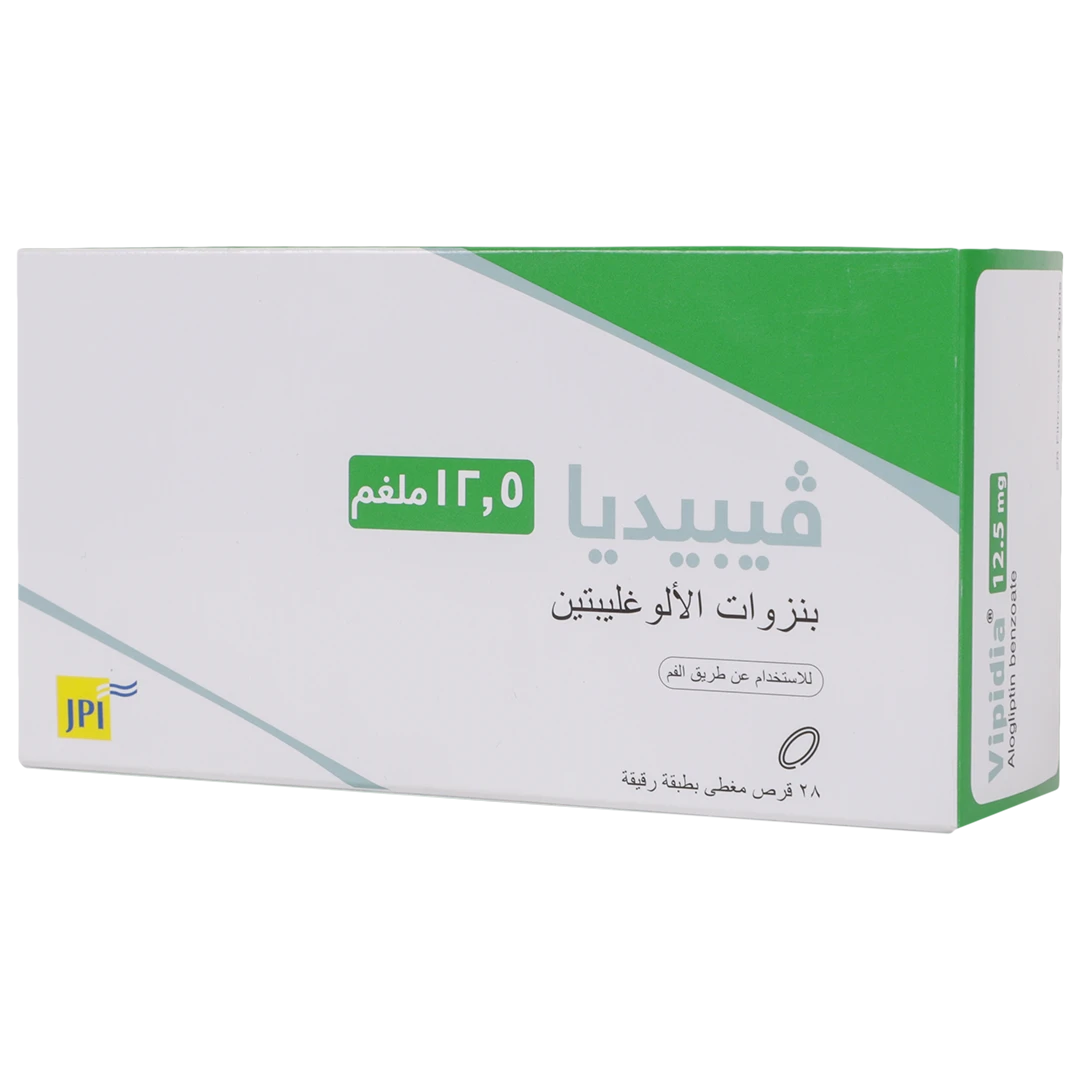
Vipidia contains the active substance alogliptin which belongs to a group of medicines called DPP-4 inhibitors (dipeptidyl peptidase-4 inhibitors) which are “oral anti-diabetics”. It is used to lower blood sugar levels in adults with type 2 diabetes. Type 2 diabetes is also called non-insulin dependent diabetes mellitus or NIDDM. Vipidia works to increase the levels of insulin in the body after a meal and decrease the amount of sugar in the body. It must be taken together with other anti-diabetic medicines, which your doctor will have prescribed for you, such as sulphonylureas (e.g. glipizide, tolbutamide, glibenclamide),metformin and/or thiazolidinediones (e.g. pioglitazone) and metformin and/or insulin. How to use The recommended dose of Vipidia is 25 mg once a day. Patients with kidney disease If you have kidney disease your doctor may prescribe you a reduced dose. This may be 12.5 mg or 6.25 mg once a day, depending on the severity of your kidney disease. Patients with liver disease If you have mildly or moderately reduced liver function, the recommended dose of Vipidia is 25 mg once a day. This medicine is not recommended for patients with severely reduced liver function due to the lack of data in these patients. Swallow your tablet(s) whole with water. You can take this medicine with or without food. Warnings and precautions Do not take Vipidia If you are allergic to alogliptin or any of the other ingredients of this medicine If you have had a serious allergic reaction to any other similar medicines that you take to control your blood sugar. Symptoms of a serious allergic reaction may include; rash, raised red patches on your skin (hives), swelling of the face, lips, tongue, and throat that may cause difficulty in breathing or swallowing. Additional symptoms may include general itching and feeling of heat especially affecting the scalp, mouth, throat, palms of hands and soles of feet (Stevens-Johnson syndrome). Warnings and Precautions Talk to your doctor or pharmacist before taking Vipidia: If you have type 1 diabetes (your body does not produce insulin) If you have diabetic ketoacidosis (a complication of diabetes that occurs when the body is unable to breakdown glucose because there is not enough insulin). Symptoms include excessive thirst, frequent urination, loss of appetite, nausea or vomiting and rapid weight loss If you are taking an anti-diabetic medicine known as sulphonylurea (e.g. glipizide, tolbutamide, glibenclamide) or insulin. Your doctor may want to reduce your dose of sulphonylurea or insulin when you take any of them together with Vipidia in order to avoid too low blood sugar (hypoglycaemia) If you have kidney disease, you can still take this medicine but your doctor may reduce the dose If you have liver disease If you suffer from heart failure If you are taking insulin or an anti-diabetic medicine, your doctor may want to reduce your dose of the other anti-diabetic medicine or insulin when you take either of them together with Vipidia in order to avoid low blood sugar If you have or have had a disease of the pancreas Side Effects STOP taking alogliptin and contact a doctor immediately if you notice any of the following serious side effects: Not known (frequency cannot be estimated from the available data): An allergic reaction. The symptoms may include: a rash, hives, swallowing or breathing problems, swelling of your lips, face, throat or tongue and feeling faint. A severe allergic reaction: skin lesions or spots on your skin that can progress to a sore surrounded by pale or red rings, blistering and/or peeling of the skin possibly with symptoms such as itching, fever, overall ill feeling, achy joints, vision problems, burning, painful or itchy eyes and mouth sores (Stevens-Johnson syndrome and Erythema multiforme). Severe and persistent pain in the abdomen (stomach area) which might reach through to your back, as well as nausea and vomiting, as it could be a sign of an inflamed pancreas (pancreatitis). You should also discuss with your doctor if you experience the following side effects Common (may affect up to 1 in 10 people): Symptoms of low blood sugar (hypoglycaemia) may occur when alogliptin is taken in combination with insulin or sulphonylureas (e.g. glipizide, tolbutamide, glibenclamide). Symptoms may include: trembling, sweating, anxiety, blurred vision, tingling lips, paleness, mood change or feeling confused. Your blood sugar could fall below the normal level, but can be increased again by taking sugar. It is recommended that you carry some sugar lumps, sweets, biscuits or sugary fruit juice. Cold like symptoms such as sore throat, stuffy or blocked nose, Rash Itchy skin Headache Stomach ache Diarrhoea Indigestion, heartburn Storage Information Do not store above 30°C. Store in the original package. Drug Interactions Tell your doctor or pharmacist if you are taking, have recently taken, or might take any other medicines. Ingredients The active substance is alogliptin benzoate.
We are Sorry, this product is unavailable now, explore other products.